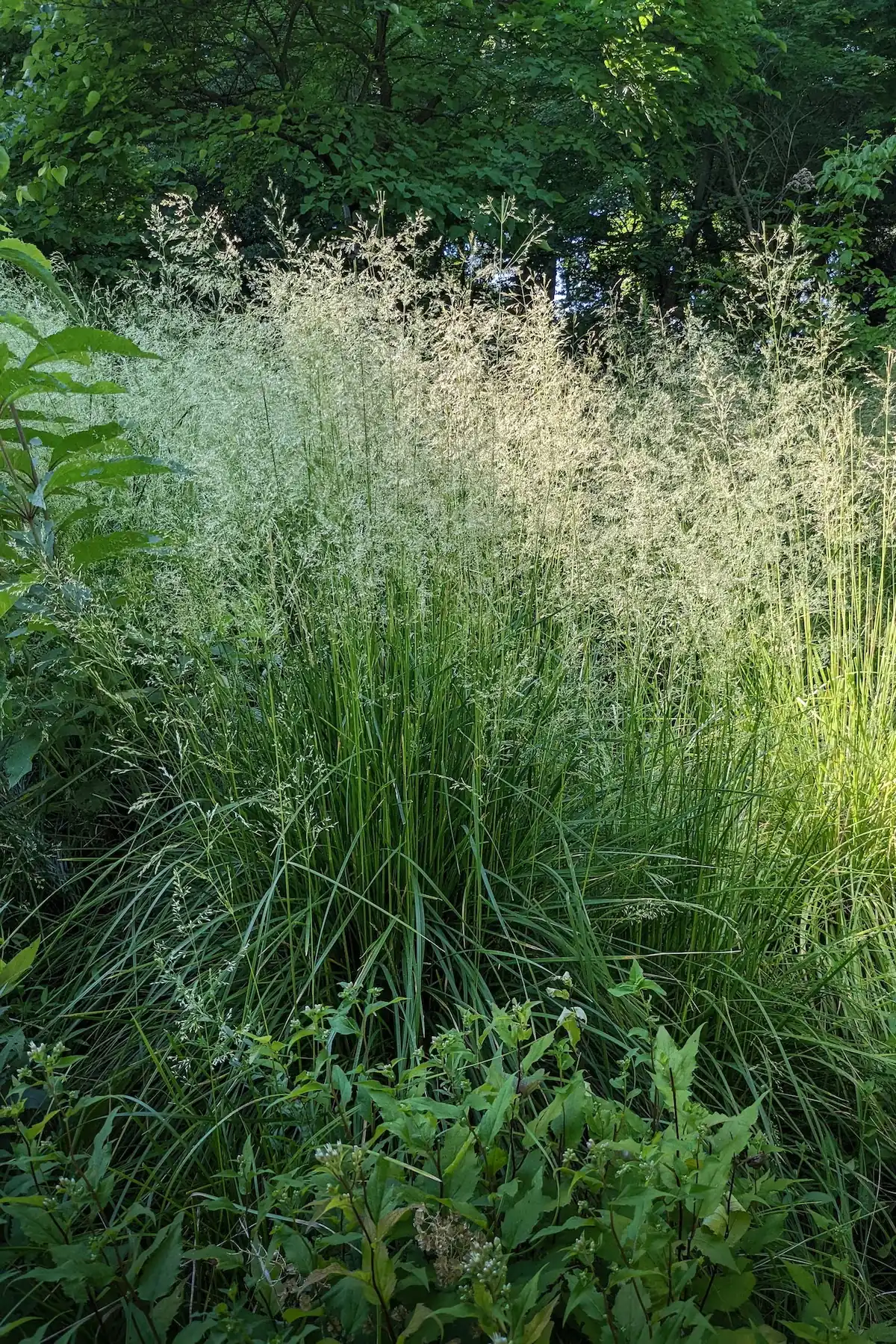
“Prairie dropseed (Sporobolus heterolepis) is a gorgeous North American native grass that's perfectly sized for smaller garden spaces. This clumping warm-season ornamental grass brings fine texture…”
Heuchera alba
Prairie Dropseed Is a Good Grass for Small Garden Spaces
Prairie dropseed (Sporobolus heterolepis) is a gorgeous North American native grass that's perfectly sized for smaller garden spaces. This clumping warm-season ornamental grass brings fine texture with its foliage and a lovely pop of late-season interest with its fall color and airy seed heads. The best part? It doesn't spread, outgrow its space, or demand dividing like some grasses do. True to its name, it drops seeds in fall that ground-feeding birds go crazy for. Plant several together and you can use prairie dropseed as a base layer in matrix planting or as green (living) mulch — two really cool naturalistic design approaches.
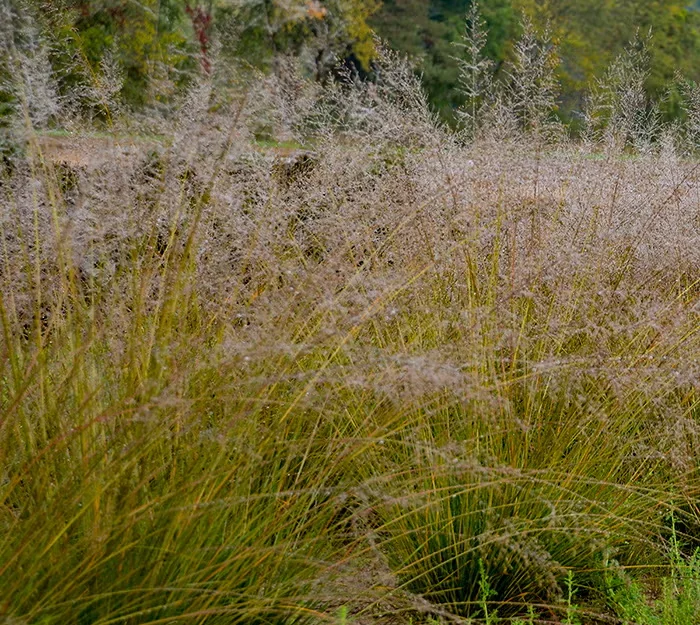
Commonly called: Prairie dropseed
Botanical name: Sporobolus heterolepis
Fragrant tan panicles bloom on several tall, airy stalks in late summer — and they smell amazing. Seeds ripen in fall, and the dried seed heads keep the interest going right through winter.
The foliage stays a bright, cheerful green through summer, then puts on a show shifting to orange and gold in fall.
This grass matures to about two feet tall and wide in foliage, with flower stalks that double its height when they shoot up. There are several named selections available now, including 'Tara' (which stays a compact one foot tall in foliage) and 'Gone With the Wind'.
Sporobolus heterolepis is native to the central US and Canada, where it grows in open, sunny spots — just soaking up the sunshine.
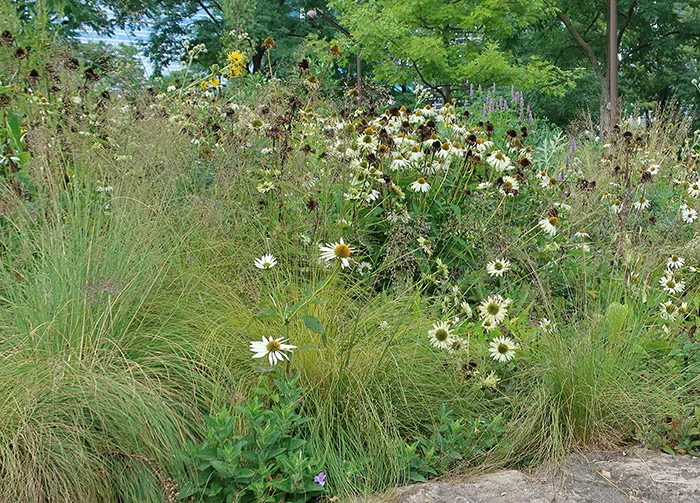
Plant prairie dropseed in full sun and well-drained soil. It's a warm-season grass, so it really gets going once temperatures warm up in late spring.
Fair warning — this grass can be a little slow to get going, with most of its early growth happening underground during the first few years. But that strong root system is what makes it such a long-lived, drought-resistant garden plant. Do give it some extra water during dry spells in that first season or two while it's settling in. (And because it has a fibrous root system rather than rhizomes, prairie dropseed stays right where you plant it — no sneaky spreading!)
One of the best things about prairie dropseed is that it holds its mature size and stays healthy without needing division — it doesn't develop that dreaded "donut hole" center that some ornamental grasses get. For maintenance, just trim the spent foliage and seed heads down to the ground in late winter and you're set. This is a perennial grass hardy in USDA Zones 3 through 9.
Image credits, top to bottom: Courtesy of Walters Gardens; By cultivar413, licensed CC BY-SA 2.0