“'King Henry' viola (Viola cornuta 'King Henry') is a petite perennial violet with fragrant dark purple flowers that just keep coming during cool weather. It's the perfect buddy for spring-blooming…”
Pulmonaria lanceolata
'King Henry' Viola Is a Perfect Companion for Spring-Blooming Bulbs
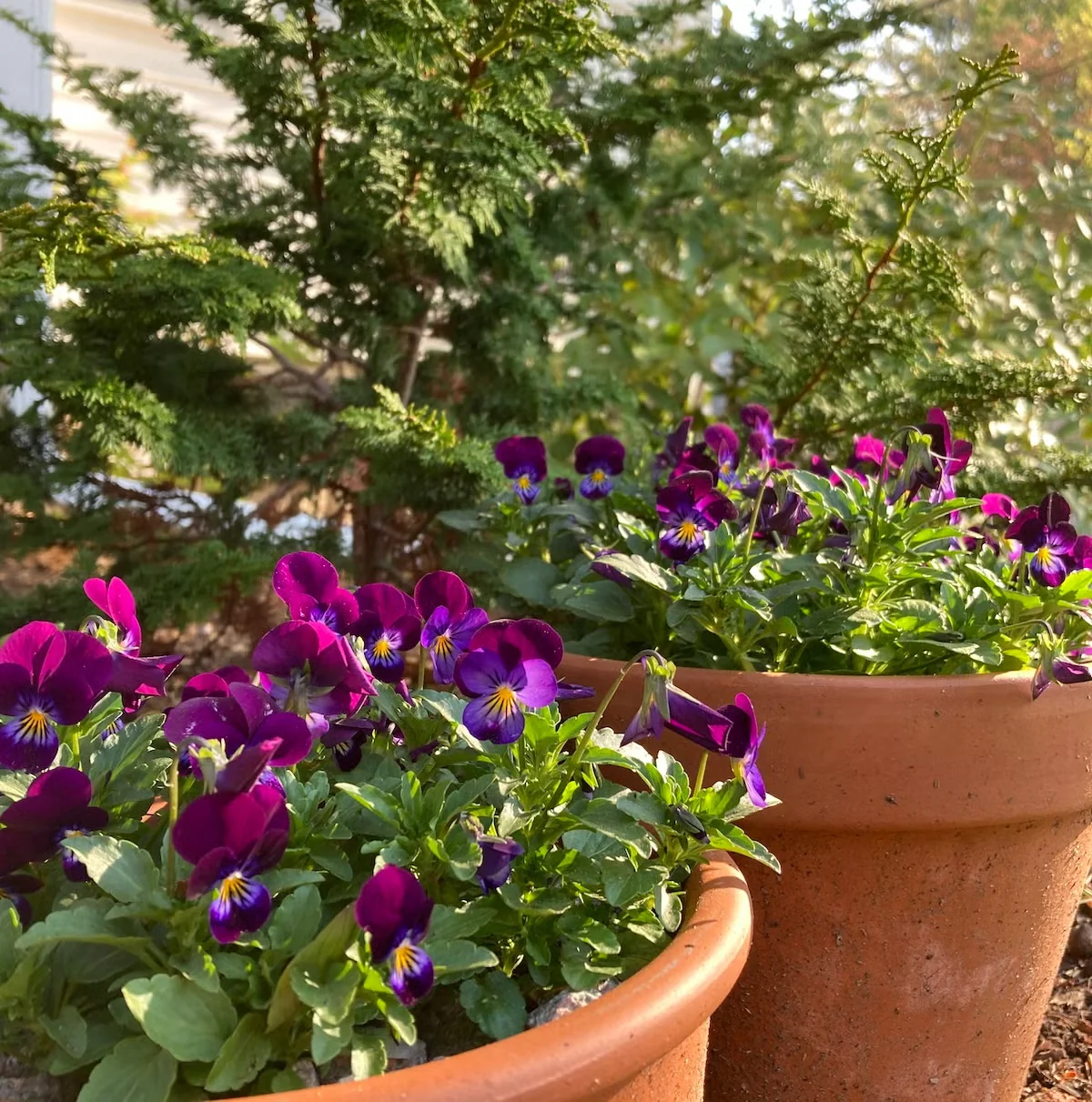
'King Henry' viola (Viola cornuta 'King Henry') is a petite perennial violet with fragrant dark purple flowers that just keep coming during cool weather. It's the perfect buddy for spring-blooming bulbs up North, or it can give you winter flowers in the mild South. Hot weather will knock it back, but it may recover and bloom again in fall. And when it's happy, it'll reseed itself around your garden.
Common name: 'King Henry' viola
Botanical name: Viola cornuta 'King Henry' (syn. 'Prince Henry')
Origin: The species Viola cornuta is native to southern and western Europe, especially the Pyrenees mountains. The heirloom cultivar 'King Henry' has unknown origins. For a while, it went by the name 'Prince Henry'.
Flowers: Five dark purple petals surround a white and gold center. These outward-facing flowers have a sweet fragrance and appear in big numbers over many weeks in spring and fall.
Foliage: Small, deep green leaves with rounded lobes.
Size and habit: Reaches about eight inches tall and wide, with a nice mounding habit.
Growing 'King Henry' viola
Exposure: Full sun to part shade
How to grow it: 'King Henry' viola grows and blooms best in the cool temperatures of spring and fall up North, and during the warm winters down South. It likes full sun to part shade and free-draining, rich soil with even moisture. Super easy to grow from seed — you can sow outdoors in late fall or earliest spring, or start indoors 8 to 10 weeks before the last expected frost. You can also start seed in midsummer for fall bloom, or just let your spring plants reseed themselves. USDA Zones 6–9, though it's often grown as an annual since it doesn't love hot summer weather.