“Released to celebrate Monrovia's 100th year in business, Centennial Ruby hydrangea really stands out with its unusually colored, long-lasting flowers and its ability to power through the things that…”
Solidago flavescens
Centennial Ruby Hydrangea Marks Monrovia's 100th Year
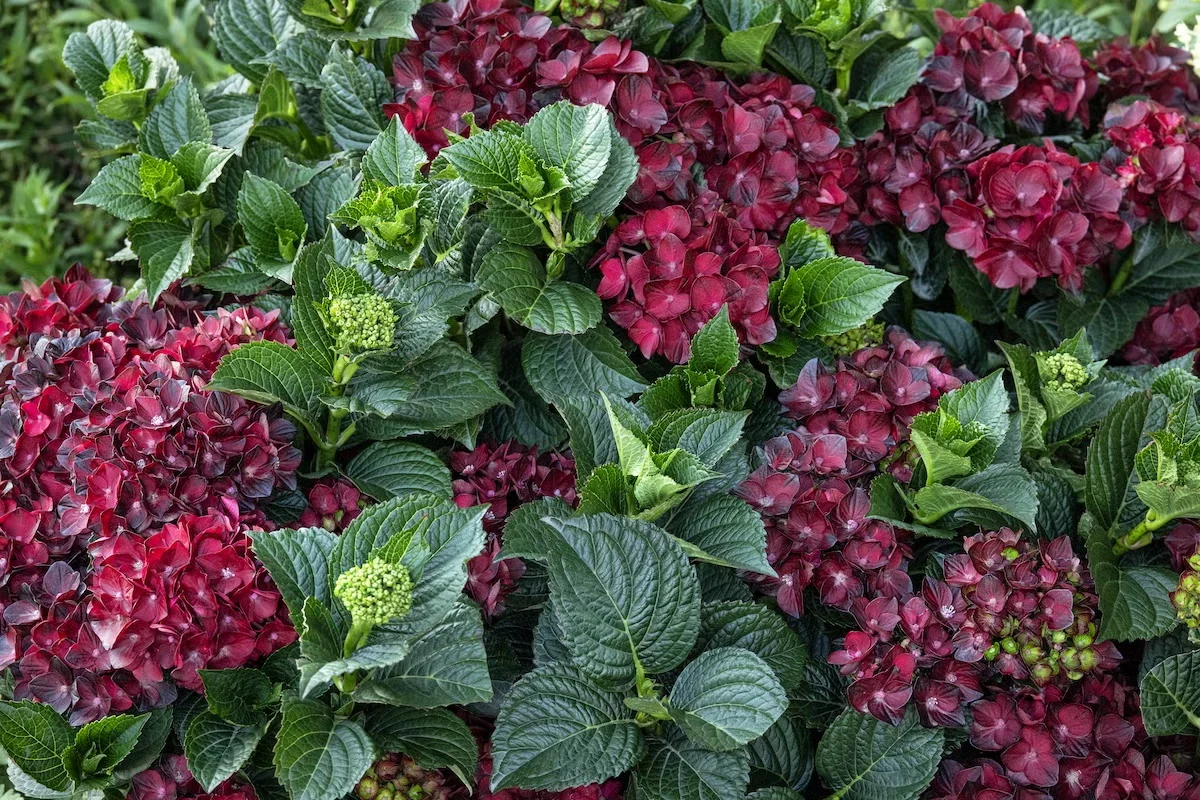
Released to celebrate Monrovia's 100th year in business, Centennial Ruby hydrangea really stands out with its unusually colored, long-lasting flowers and its ability to power through the things that stress out other bigleaf hydrangeas — like hot weather and missed waterings.
Common name: Centennial Ruby hydrangea
Botanical name: Hydrangea macrophylla Centennial Ruby ('Hokocentennial')
Origin: Hydrangea macrophylla is native to Eastern and Southeast Asia. Monrovia introduced the cultivar Centennial Ruby in 2026 to mark the company's 100th anniversary. (Monrovia was founded in 1926 in Southern California by Danish immigrant Harry Rosedale. Today, the company operates nurseries in California, Oregon and Georgia, which lets them develop, test, and propagate plants for all sorts of different climates.)
Flowers: Appearing in midsummer, the long-lasting flowers open in a dark cherry red to deep maroon that can darken almost to black. You'll see different shades on the plant at the same time as individual flowers develop and mature. And here's the cool part — while soil pH shifts the color of some bigleaf hydrangeas, Centennial Ruby holds onto its red hues no matter what soil it's in.
Foliage: Deciduous. Broadly oval, deep green leaves with a quilted texture.
Size and habit: This deciduous shrub reaches about three feet tall and wide with a nice rounded shape. It has really strong stems that hold up those large flowerheads without flopping, even in the heat of summer.
Growing Centennial Ruby hydrangea
How to grow it: This hydrangea will do its best with filtered or part sun, evenly moist soil, and an organic mulch to protect the root zone and build rich soil. That said, once it's established in your garden it can hold those stems up even through heat and lower moisture. Just prune to remove dead wood or spent flowers. USDA Zones 4–9.