“Sedges have seriously been having a moment these past few years. Articles in The Washington Post (2017), Horticulture (2022), and Landscape Architecture (2023) have turned a whole new wave of…”
Astilbe flavescens
How to Combine Sedges with Garden Perennials
Sedges have seriously been having a moment these past few years. Articles in The Washington Post (2017), Horticulture (2022), and Landscape Architecture (2023) have turned a whole new wave of gardeners on to plants in the genus Carex — you know, the ones we casually call sedges.
While some of those flashy, variegated Asian selections have been around for decades, lately it's the North American native sedges that everyone's talking about. A 2023 trials report from Mt. Cuba Center really put them on the map — their research team put a whopping 70 different native Carex species and cultivars to the test for the Mid-Atlantic region.
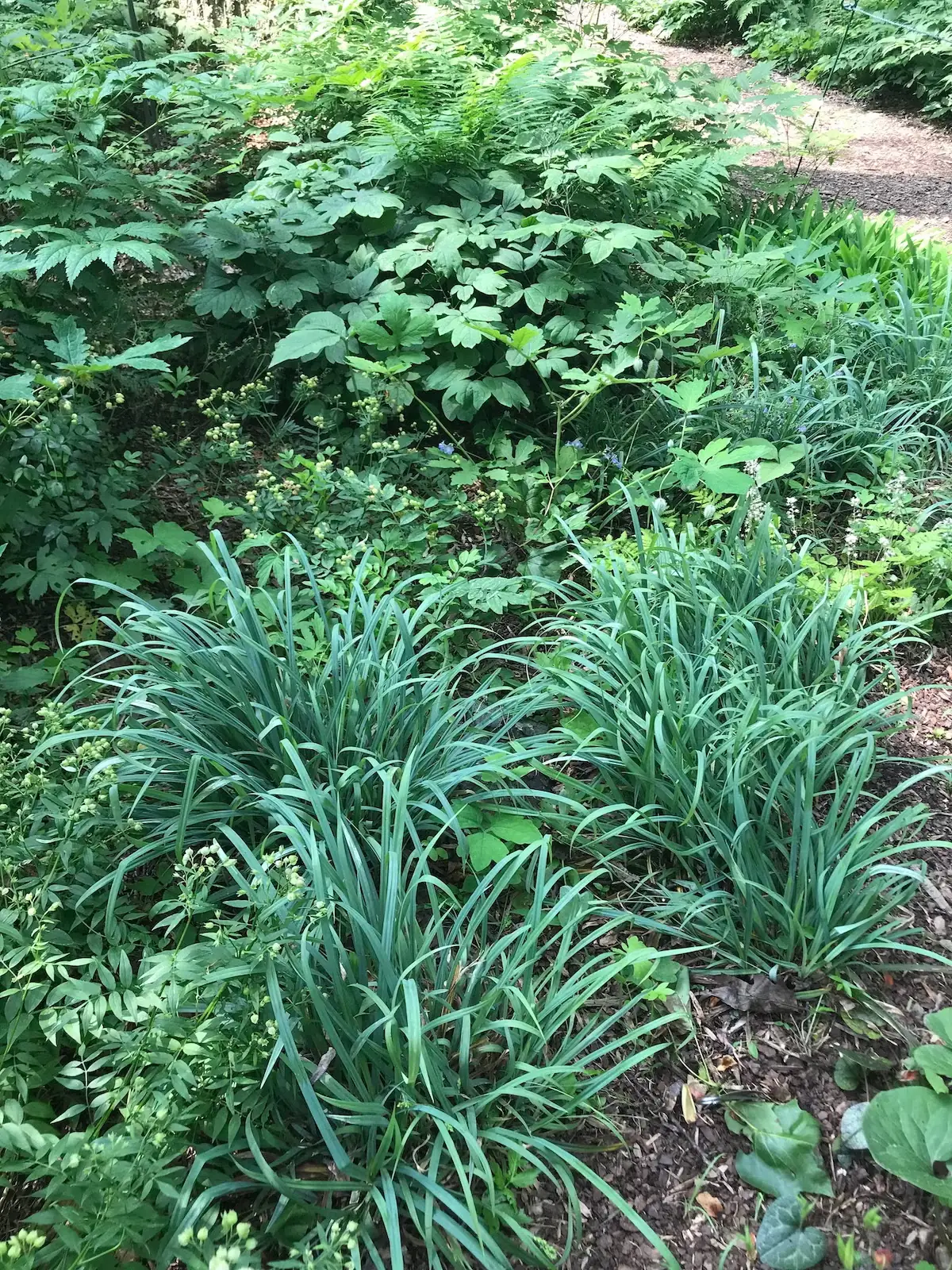
Seventy might sound like a lot, but honestly, it's just a sliver of the 500+ sedges native to North America. With that kind of variety, there's pretty much a sedge for every spot in your yard. The catch? Availability can be hit or miss depending on where you live. The good news is the horticultural industry knows this and is working hard to get more of them into circulation.
It's kind of funny they're getting all this attention when you consider how low-key native sedges actually look. Their flowers are usually tiny, and only a handful of species put on anything you'd call a show. But that's not really the point — their magic is in that grassy foliage and their couldn't-care-less attitude. They're born for a supporting role in the garden.
Those varying shades of green make the perfect backdrop for your flashier flowering plants. The narrow blades add this lovely visual texture that plays so well against broader-leaved perennials. Plus, they're pretty easygoing — not a lot of fussing required. They're also absolute lifesavers in those part-sun to shady spots where turfgrass and warm-season ornamental grasses just can't hack it.
Native sedges thrive in challenging sites
Carex is one versatile genus — there are species adapted to just about every kind of natural and man-made environment you can think of.
Kathryn Ancaya of Living Roofs, Inc. is a landscape architect down in North Carolina, and her sedge combos actually survive the brutal conditions on green roofs — you know, those roofs designed to soak up water and then drain fast. Plants up there have to tough out getting drenched by rainstorms and then sitting dry for long stretches in between. They need to handle the blazing daytime heat of Southeastern summers and those sticky nighttime temps that can just drain a plant's energy reserves.
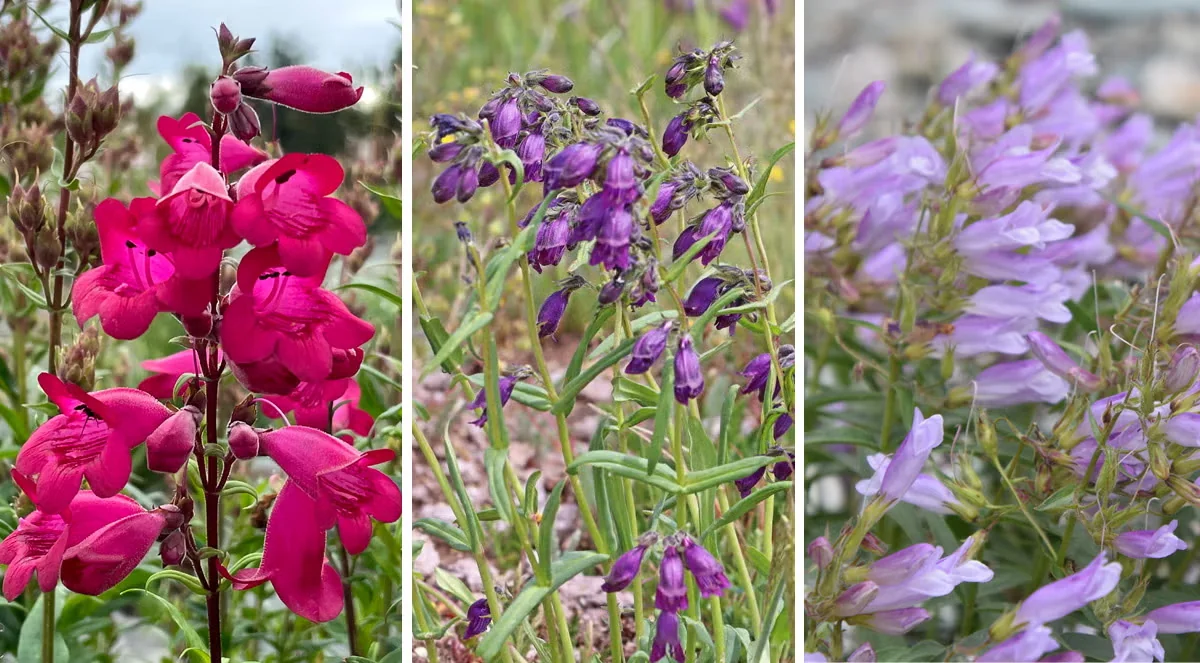
Back on solid ground, one of Ancaya's go-to combos — Texas sedge (C. texensis; Zones 5–9), nodding onion (Allium cernuum; Zones 4–8), and hairy beardtongue (Penstemon hirsutus; Zones 4–7) — works beautifully in hot, dry spots like pathway edges and the upper reaches of rain gardens.
A lot of Carex species actually come from moist or wet environments naturally. Bentley Ruggles, another North Carolina-based landscape architect, likes to use eastern narrowleaf sedge (C. amphibola; Zones 3–9) on wet sites, pairing it with the upright, architectural look of soft rush (Juncus effusus; Zones 4–9) and blue flag iris (Iris versicolor; Zones 3–9).
Ruggles is always on the hunt for plants that'll actually thrive in those soggy, low-oxygen soils. These moisture-lovers are super useful along pond or stream edges, in drainage ditches, or right where the downspout dumps water. And when you've got big areas to fill or aggressive plants to wrangle, some of the larger, colonizing species like fox sedge (C. vulpinoidea; Zones 3–8) can really give you the upper hand.
Use short sedges as ground cover and for wildlife
Most of the sedges you'll find as a home gardener are on the shorter side — usually three feet tall or less. Pair them with other low-growing perennials and you'll get benefits that mulch or turfgrass just can't match. They suppress weeds, slow down and filter stormwater, help water soak into the ground, and support all kinds of wildlife. Many sedge species are caterpillar hosts, and they provide food, cover, and nesting spots for birds and small mammals.
If you're gardening with wildlife in mind, sedges are key for creating what folks call "soft landings" for pollinators and beneficial insects. Pollinator conservationist Heather Holm explains that a lot of insect species live part of their lives up in trees, then drop down to the ground to keep developing. If they land on bare hardscape, that's often it for them. But diverse native plantings under native trees give them the habitat and shelter they desperately need to survive.
With sedges holding down the ground layer, other perennials can fill in and really strut their stuff. Green and gold (Chrysogonum virginianum; Zones 5–9), golden ragwort (Packera aurea; Zones 3–8), eastern columbine (Aquilegia canadensis; Zones 3–8), and dwarf crested iris (Iris cristata; Zones 3–9) are all colonizers with persistent basal foliage — they flower in spring, and that basal greenery stays put all year long. I love combining these ground-covering perennials — plus wild blue phlox (Phlox divaricata; Zones 3–8) to really amp up the spring flower show — with my favorites, Cherokee sedge (C. cherokeensis; Zones 6–9) and rosy sedge (C. rosea; Zones 3–8). These combos handle mixed sun and shade beautifully, which is a huge plus when you're gardening under big mature trees.
Use tall sedges in meadow plantings
In sunnier spots, sedges tend to do best where it's cooler, where the moisture is steady, or where they're tucked under shrubby plants and taller perennials. Honestly, whether it's sun or shade, carex are master minglers — they just know how to fit in. That's what makes them such naturals as underplantings for taller perennials.
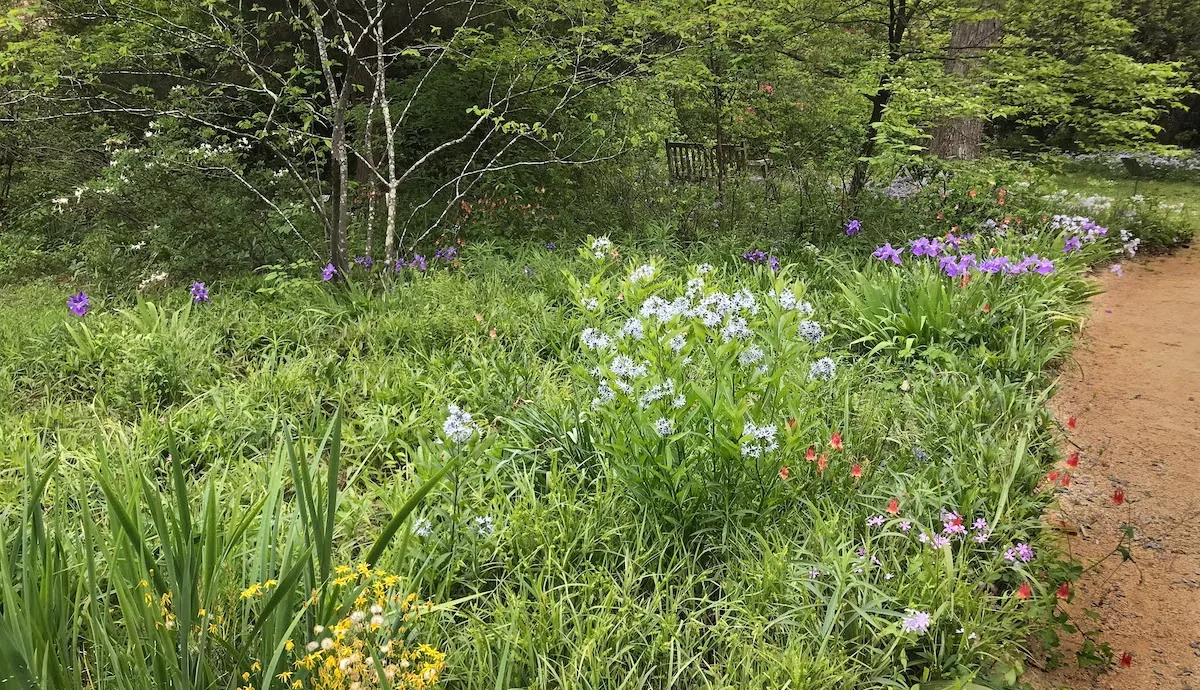
Arkansas bluestar (Amsonia hubrichtii; Zones 5–8) and false wild indigo (Baptisia australis; Zones 3–9) are real garden heavyweights. Eastern woodland sedge (C. blanda; Zones 4–8) and eastern narrowleaf sedge (C. amphibola; Zones 3–9) are fantastic fillers to tuck underneath these taller perennials, especially in those mixed sun-shade spots. Fair warning though — these sedges self-seed readily, so only put them where you're happy to have more.
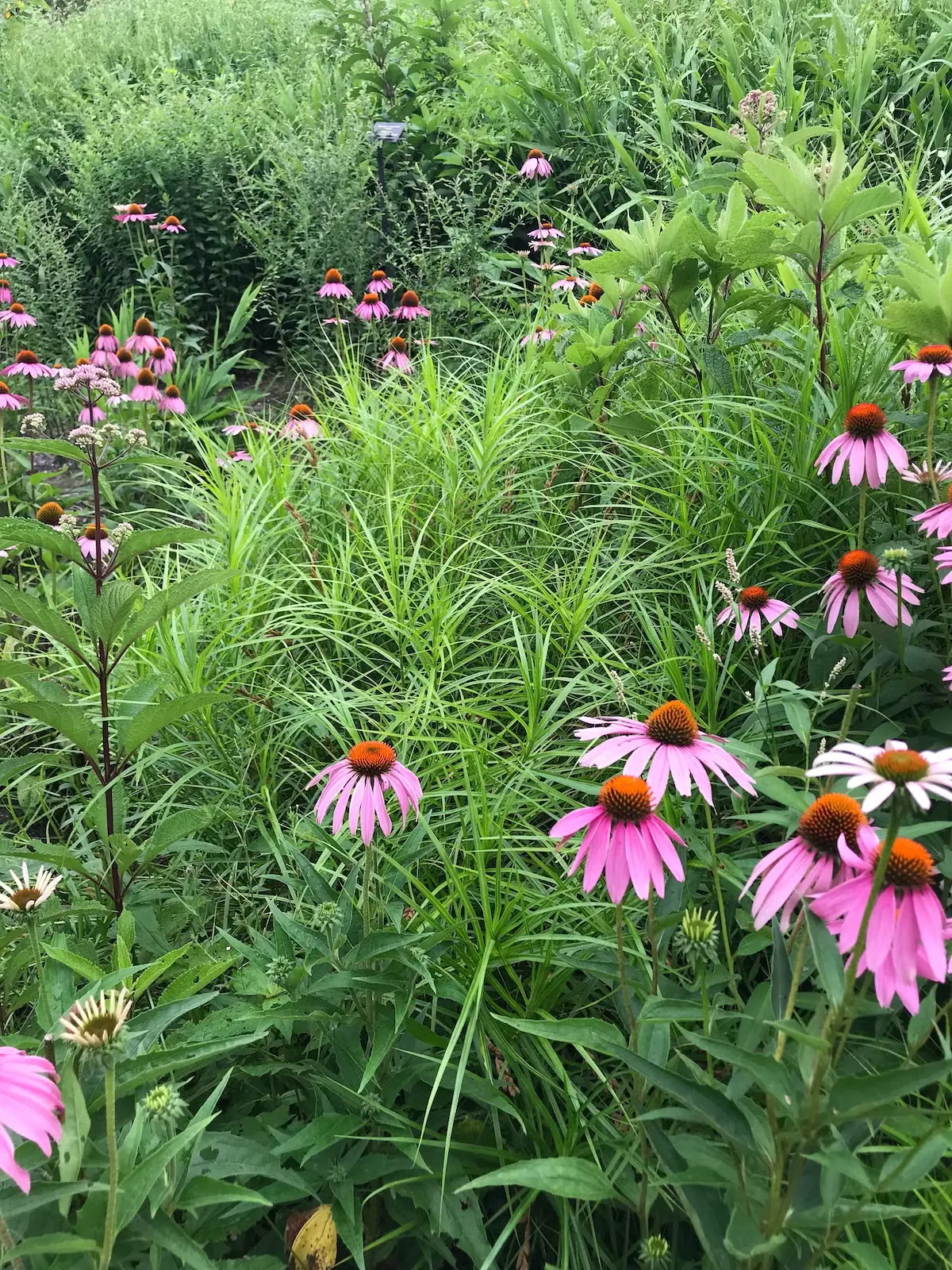
Muskingum sedge (C. muskingumensis; Zones 4–8) is right at home in consistently moist spots and has this lovely, gentle spreading habit. Its palm-like foliage looks stunning against the bold leaves and bright blooms of purple coneflower (Echinacea purpurea; Zones 3–8) and compact Joe-Pye weed cultivars like E. dubium 'Little Joe' (Zones 3–8).
Sedge foliage brings lasting interest
Sedge combos are also a chance to really lean into foliage. Mixing textures — fine leaves, bold leaves, different shapes and sizes — gives you visual contrast and lets you build compositions with layers of interest that go way beyond flowers and color. Foliage-first plantings keep looking good all season long, too. They give your eye a place to rest — there's something soothing about them, but they're still interesting enough to keep you looking.
Ferns are classic foliage plants and absolute naturals as sedge companions. The lacy fronds of lady fern (Athyrium filix-femina; Zones 3–8) pair so beautifully with the slim blades of Appalachian sedge (C. appalachica; Zones 3–8), and the best part? Both thrive in rich, moist, well-drained soils.
For drier spots, give white-tinge sedge (C. albicans; Zones 3–8) and evergreen Christmas fern (Polystichum acrostichoides; Zones 3–9) a try. Northern maidenhair (Adiantum pedatum; Zones 3–8) has this intricate foliage with delicate black stems — it creates a gorgeous texture party growing alongside the broad, bluish leaves of Bunny Blue sedge (C. laxiculmis 'Hobb'; Zones 4–8) and the plump little rosettes of woodland stonecrop (Sedum ternatum; Zones 4–8).
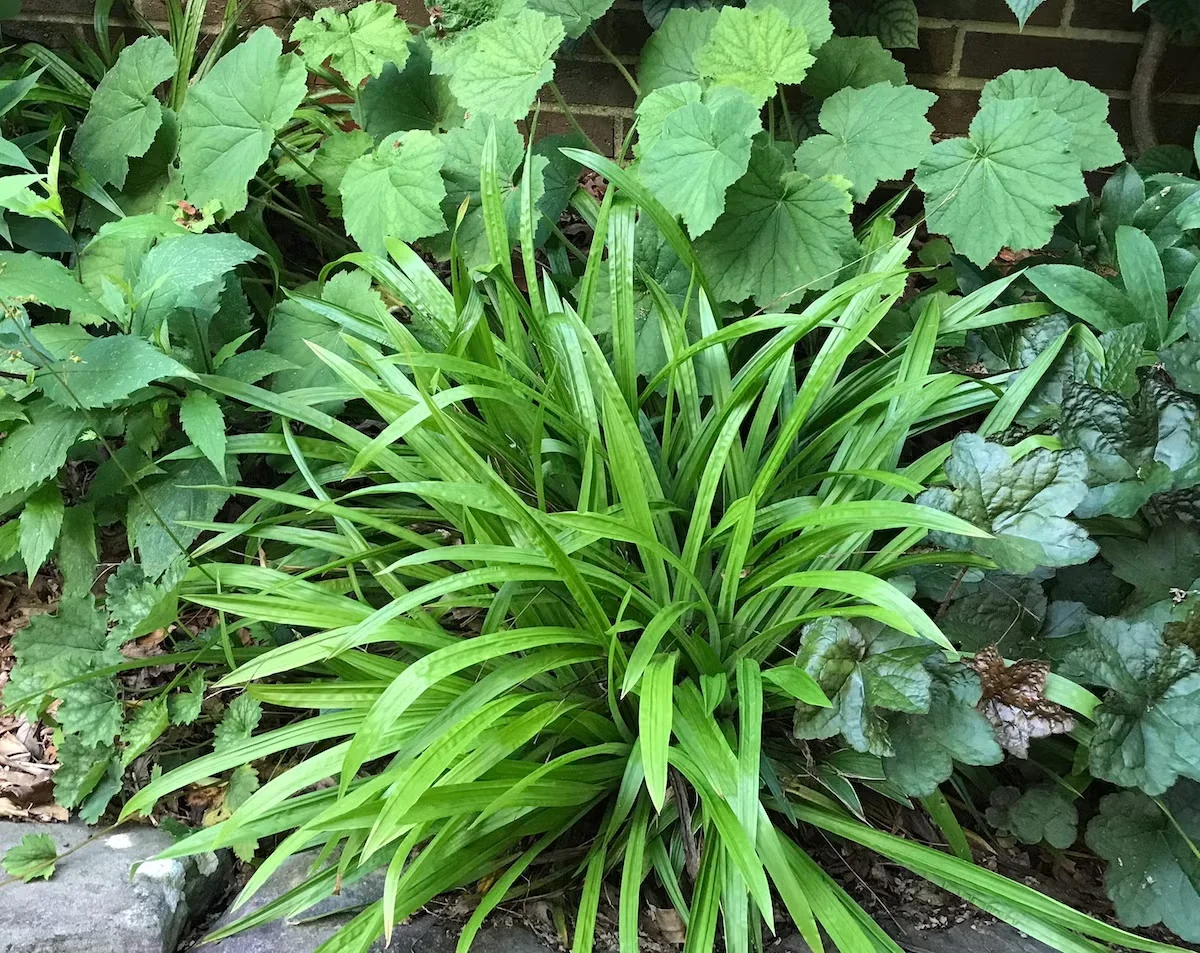
In a foliage-heavy combo, the broader-bladed sedges bring this great linearity with a bold, lush visual punch. Like Bunny Blue, thinfruit sedge (C. flaccosperma; Zones 5–8) has those wide, bluish leaves — and it's way tougher than it looks. Plantainleaf sedge (C. plantaginea; Zones 3–8) is honestly one of my favorites. Those wide, dimpled leaves are why some people call it seersucker sedge. Try mixing these bold-textured sedges with the flashy foliage of alumroot (Heuchera) or foamflower (Tiarella), then tuck in some white wood aster (Eurybia divaricata; Zones 3–8) for quick coverage and late-season blooms.
5 sedge combinations to try
1. Got full sun to part shade and wet soil? Try this combo:
Cherokee sedge (Carex cherokeensis) — a tidy 10- to 12-inch species with gorgeous rich green foliage
Golden ragwort (Packera aurea) — a semievergreen ground cover with dark, heart-shaped leaves and cheerful stalks of yellow flowers in spring
Wild strawberry (Fragaria virginiana) — a cool-season ground cover that gives you spring flowers and tiny fruits in early summer
2. Dealing with sun or shade and dry soil? Here's what works:
Golden star sedge (Carex rosea) — a compact little number that grows as a neat tuft of bright green leaves
Robin's plantain (Erigeron pulchellus) — an aster-like perennial with white flowers popping up above a clump of paddle-shaped leaves in spring
3. Got shade and wet soil? This combo's for you:
Creek sedge (Carex amphibola) — a foot-tall species with a decidedly fountain-like habit that just looks elegant
Green and gold (Chrysogonum virginianum) — a mat-forming perennial with daisy-like yellow flowers that just keep coming from spring to fall
4. Full sun to part shade with dry to moist soil? Give these a go:
Texas sedge (Carex texensis) — a foot-tall species with its foliage held in a tight, neat bunch
Nodding onion (Allium cernuum) — 12-inch clumps of strappy foliage topped with nodding clusters of pink flowers in summer
Hairy beardtongue (Penstemon hirsutus) — a compact penstemon with charming pink flowers in early summer and foliage that turns a lovely red in fall
5. Shady spot with dry to moist soil? Try this mix:
Creeping sedge (Carex laxiculmis) — an evergreen species with straplike blue-green leaves that look great year-round
White wood aster (Eurybia divaricata) — a sprawling perennial with heart-shaped leaves and clouds of white flowers in late summer
Heart-leaf aster (Symphyotrichum cordifolium) — an upright beauty with blue flowers that carry you from late summer right into fall
Images courtesy of Izel Native Plants.