“Eastern arborvitae, or Thuja occidentalis, are garden favorites for good reason — those evergreen leaves bring color and texture to the garden year-round. The species itself is a needled evergreen…”
Pieris lutea
Growing Eastern Arborvitae, Plus Exciting New Varieties
Eastern arborvitae, or Thuja occidentalis, are garden favorites for good reason — those evergreen leaves bring color and texture to the garden year-round. The species itself is a needled evergreen native to eastern Canada and the northeastern U.S., where you'll find it growing along lakesides and on open hills. Thanks to selective breeding, gardeners now have a ton of arborvitae options; cultivars come in all shapes and sizes, with foliage in gold, reddish tones, and every shade of green you can imagine.
How to grow eastern arborvitae
No matter which cultivar you pick, all eastern arborvitaes love even moisture and good drainage. They're pretty low-maintenance once settled, but they do need plenty of water while they're getting established.
Whatever you do, don't let your arborvitae dry out right before winter. Winter burn is a real thing — it happens when cold winds suck the moisture right out of the foliage. To prevent it, pick a sheltered spot or wrap up any exposed new plantings that haven't grown deep roots yet. And definitely give them a drink during any winter warm spells.
Full sun keeps eastern arborvitae's foliage nice and dense with compact branching, though part sun works too (and in the South, a few hours of shade is actually helpful). Push them into deeper shade, though, and the growth gets loose and straggly.
Fun new cultivars of eastern arborvitae
Here are some recently released arborvitae cultivars worth checking out for your garden:
Planet Earth arborvitae (Thuja occidentalis 'RutThu4')
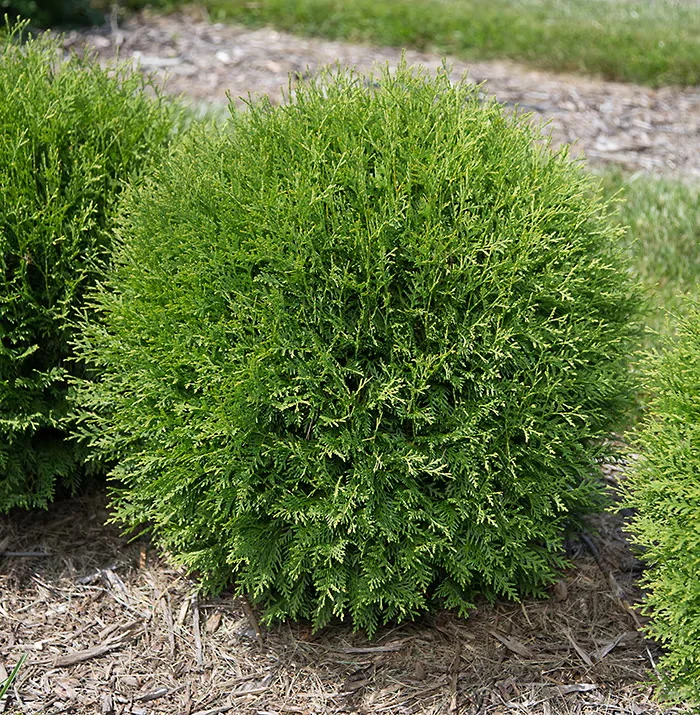
This arborvitae grows in a perfectly round shape all on its own — no shearing needed to keep it looking sharp. The flat sprays of medium-green leaves give it a fine, delicate texture. Planet Earth does great in both warm and cold climates, though it'll take on a bronze tone in colder winters. With its ball-like form, it's a nice structural element in mixed borders and foundation plantings, or you can line several up as a mid-height hedge.
Size and habit: This is a globe-shaped arborvitae standing three to five feet tall and wide.
Additional growing notes: Planet Earth shows solid resistance to Passalora needle blight (also called Cercospora needle blight), that fungal disease that makes conifers brown and drop their foliage. Zones 4–8.
Tall Guy arborvitae (Thuja occidentalis 'Rutzhu5')
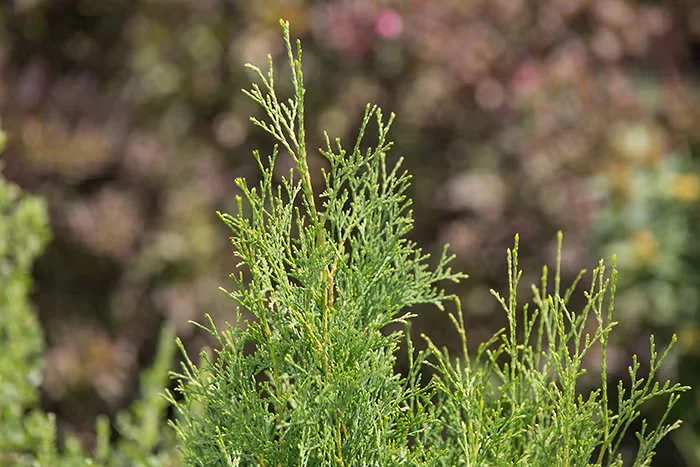
The name says it all — Tall Guy is a columnar arborvitae that reaches for the sky without spreading out much, making it a great vertical accent among lower shrubs or sitting pretty at the corner of the house. This cultivar keeps a single leader (main trunk), so you won't get that loose, gappy growth that plagues upright arborvitaes with competing stems. The scaly foliage stays a rich emerald green all year.
Size and habit: Tall Guy grows as a narrow cylinder, 8 to 12 feet tall and just 2 to 3 feet wide.
Additional growing notes: Coming from the same breeding program as Planet Earth, Tall Guy also resists Passalora needle blight. Zones 4–8.
Lemon Burst arborvitae (Thuja occidentalis 'RutThu3')
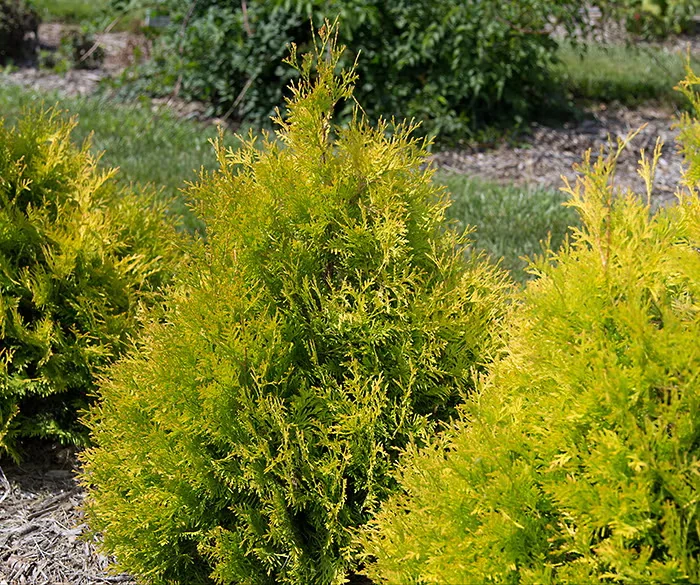
This roughly triangular shrub is a showoff with bright yellow foliage all through the growing season. When cold winters roll in, Lemon Burst shifts to gorgeous shades of orange.
Size and habit: Lemon Burst is wide at the base and tapers to the top, forming a stout cone four to six feet tall and three to four feet across at its widest.
Additional growing notes: Resistant to Passalora needle blight.
Sting arborvitae (Thuja occidentalis 'SMNTOO')
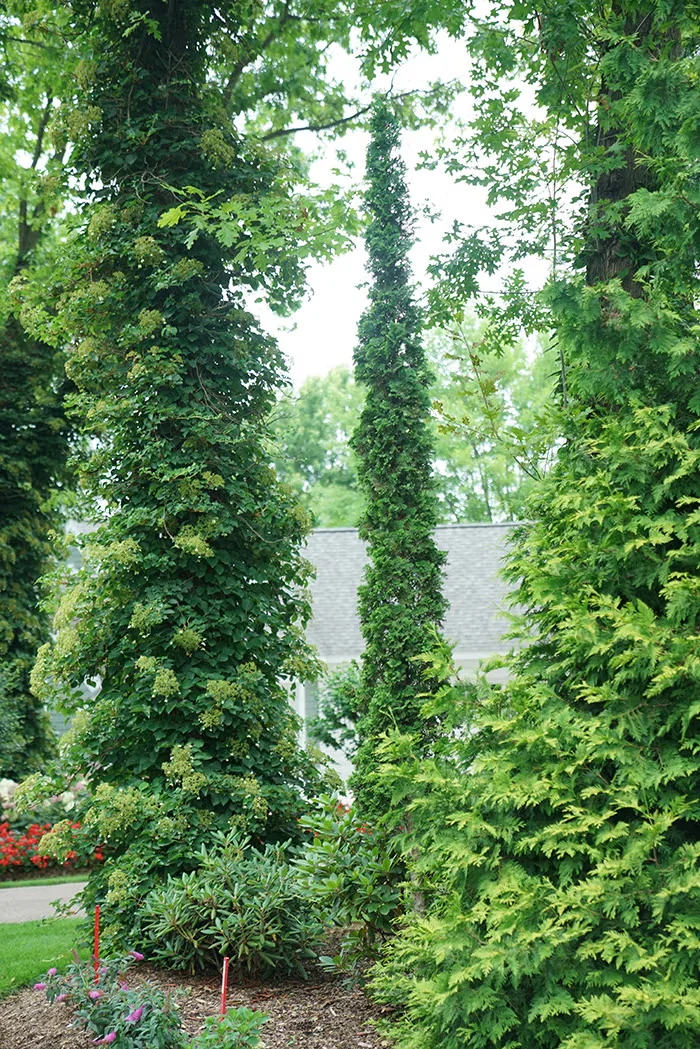
If you need an impossibly skinny evergreen accent, Sting is your plant — it can squeeze into the tightest garden spots you've got, topping out at just 18 inches wide. That unique silhouette is begging for creative placement, whether you go with a single specimen or a quirky cluster of several Stings.
Size and habit: This arborvitae reaches 15 to 20 feet tall and just 12 to 18 inches wide.
Additional growing notes: Zones 3–8.
Golden Child arborvitae (Thuja occidentalis 'Mirjam')
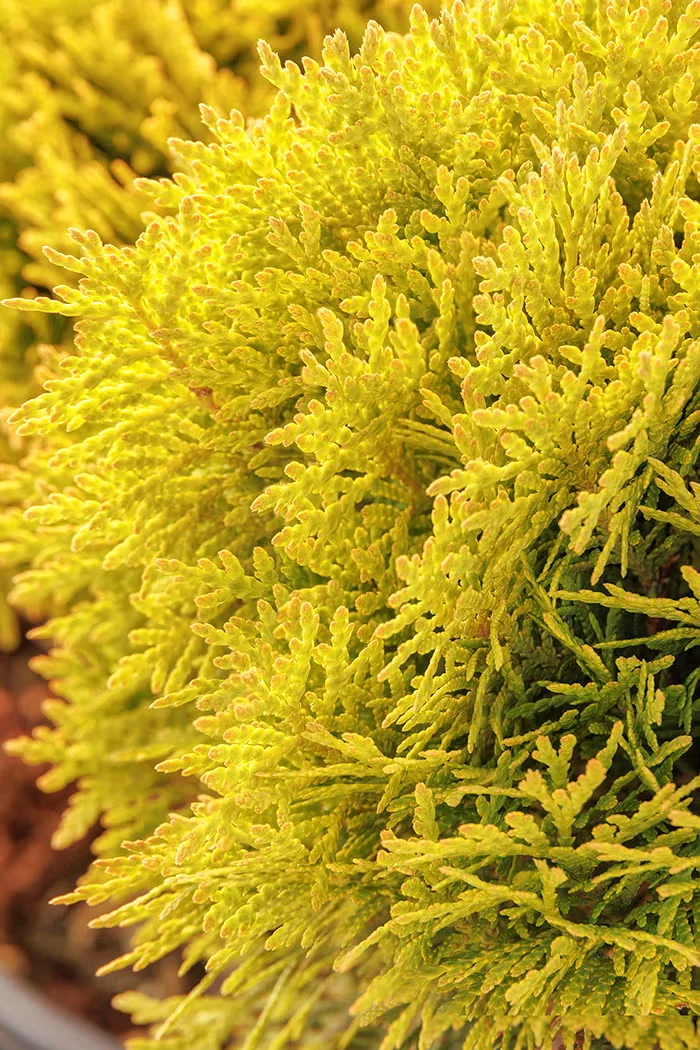
With its compact size and knockout foliage, Golden Child is a natural for containers. New growth comes in sunny yellow and matures to lemon-lime. In winter, the foliage can pick up a bronze tone, especially in colder zones.
Size and habit: Golden Child has a round shape, growing 18 to 24 inches tall and wide.
Additional growing notes: Golden Child works best as a year-round container plant in Zones 6 and warmer. Pick a pot that can handle your coldest winter temps, and be diligent about keeping the soil moist through the growing season and any winter thaws. Planted in the ground, Golden Child is happy in Zones 4 through 8.
Photo credits: Sting arborvitae courtesy of Proven Winners; Golden Child arborvitae courtesy of Monrovia; Planet Earth, Tall Guy, and Lemon Burst arborvitae courtesy of First Editions