“If you wander over to the shade tables at your local garden center, you'll find tons of perennials grown mainly for their foliage — think delicate fern fronds, those bold and beautiful hosta leaves,…”
Rhododendron montana
Foliage Plants for Sun Lend Lasting Interest to the Garden
If you wander over to the shade tables at your local garden center, you'll find tons of perennials grown mainly for their foliage — think delicate fern fronds, those bold and beautiful hosta leaves, or the cute polka dots on lungwort. Most of us know how to put together foliage combos for texture and color in shady spots, but we don't always think to do the same out in the sun. Probably because there are just so many sun lovers that are all about the flowers. But honestly, wouldn't it be great to mix in some foliage plants for sun too?
To get you started, here are some perennials and shrubby plants that love the sun and bring really interesting color, shape, or texture through their leaves. Next time you're plant shopping, peek past those flashy blooms on the sun tables and I bet you'll find even more that spark your creativity.
1. Border sedum
Upright, mound-forming border sedums (Hylotelephium) have been popular forever — and no wonder, they're so easy to care for and they bloom late. Their dense clusters of tiny pink or white flowers show up in late summer or fall, feeding pollinators and basically hiding the foliage underneath. But before those flowers take over, the broad, fleshy, stiff leaves make a really nice contrast with finer-textured sun lovers.
Plus, a lot of cultivars bring a splash of color with their foliage. Autumn Charm ('Lajos') is still a super popular variegated sedum, with minty green leaves edged in soft yellow. It showed up as a sport (basically a genetic mutation) of the classic green-leaved 'Autumn Joy', and it's proven really stable — meaning it doesn't tend to revert back to plain green leaves.
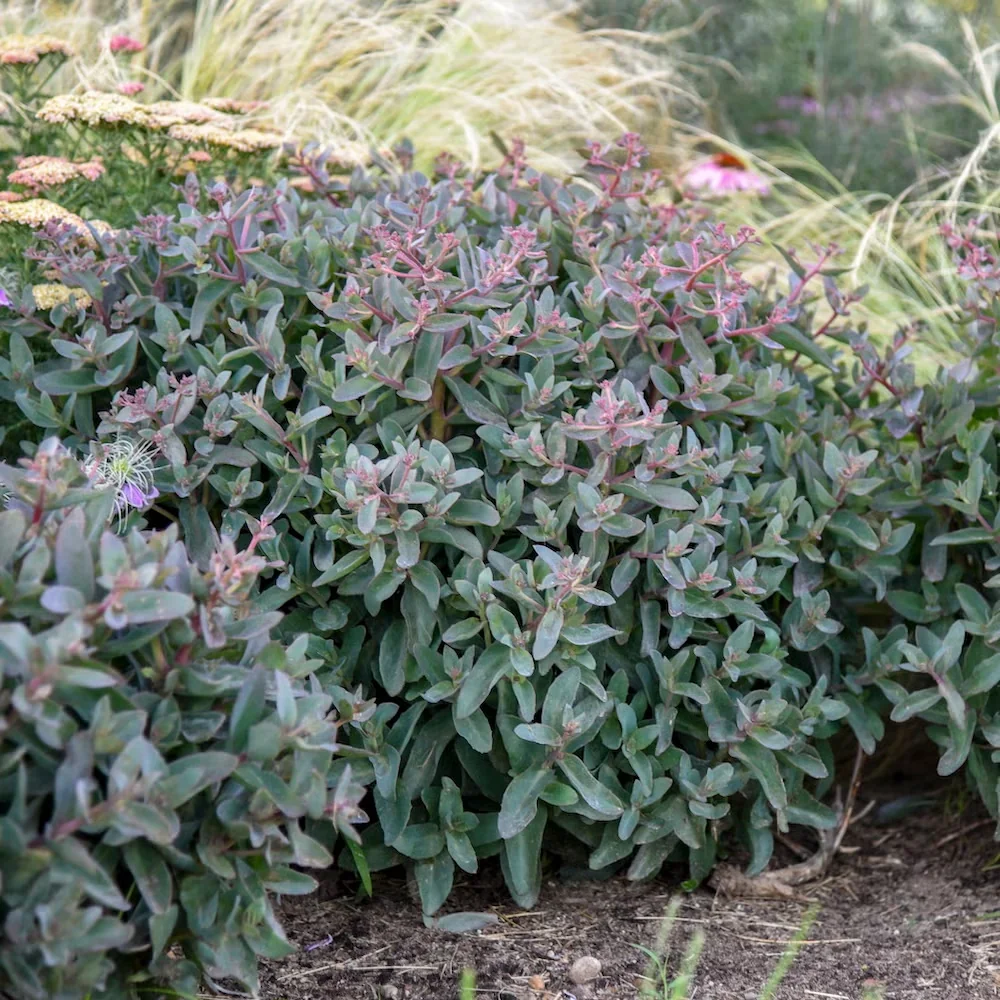
If you'd rather go with a solid leaf, sedum has plenty of options beyond plain green. Dark-leaved sedums like 'Back in Black' are versatile companions for spring- or summer-blooming neighbors — whether those flowers are in hot colors for contrast or cool shades for a more blended look. Lighter-colored picks like 'Tiramisu', with its bronze-tinged blue foliage, are just as handy.
Besides sun, border sedums want well-drained soil that's on the lean side. Skip the fertilizer — it just makes them flop. Once they're settled in, these perennials handle drought just fine. They're generally hardy in USDA Zones 3 through 9.
2. Adam’s needle
Native to the Mid-Atlantic and Southeast (and naturalized farther north and west), Adam’s needle, or Yucca filamentosa, grows as a rosette of upright, swordlike leaves. The species name actually refers to those curly threads you see along the leaf edges. Its spiky silhouette is perfect for breaking up a sunny border full of mounding shapes and fine foliage — and the rough leaf texture means deer and rabbits basically leave it alone. Several cultivars have been developed for color or a tidier habit.
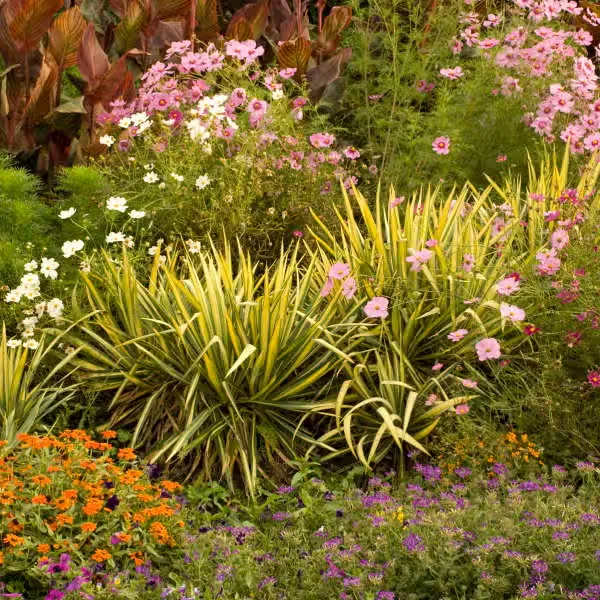
Among the variegated yuccas, 'Color Guard' can reach four feet tall and has a gold stripe running down the center of each leaf. In the hottest months, the color shifts to a creamier shade but stays unmistakably yellow. 'Golden Sword' looks similar but stays smaller, growing two to three feet tall with less-stiff foliage. (Both cultivars are sometimes sold as Y. flaccida — there's a long-standing debate about whether the two species are actually distinct or if flaccida is just a variety of filamentosa.)
If you want a Y. filamentosa without the gold markings but still a little something special, 'Excalibur' really stands out. This one stays under two feet tall. Its foliage is a bluish gray-green that beautifully shows off all those curly white filaments along the edges.
Want to know more? Read about 'Excalibur' yucca.
Adam’s needles are a breeze to grow. They prefer full sun but will put up with some shade. Good drainage is a must, but beyond that they're not picky about soil. They're highly drought tolerant, and they form a taproot that can make them tough to move — or remove! Bell-like flowers show up on impressively tall stems on mature plants, and the plant keeps right on living after blooming (unlike agaves, which die after they flower). These yuccas are hardy in Zones 6 through 10, and they can even survive a Zone 5 winter with some protection.
3. Silver foliage plants for sun
Silver and gray-leaved plants are some of the best foliage plants for sun — and not just because they look gorgeous, but because they're incredibly tough. Like everything in the plant world, that silver look didn't evolve just to wow us gardeners. Most of the time, it's actually an adaptation to tough conditions.
Some silver plants have a waxy or filmy gray coating on their leaves that helps reflect intense sun. Others have a thicker fuzzy coating that helps them handle drought — the silvery fuzz actually catches rainfall, keeps the leaf cells moist, and then sheds the extra water down toward the roots. Pretty clever, right?
Want to dive deeper? Read more about using silver-leaved plants.
For a really bright silver, check out Artemisia 'Silver Mound'. With its dense covering of super narrow leaves and rounded shape, it honestly looks like a pom-pom. This low-growing perennial loves heat and dry, poor soil. It performs best in Zones 3 through 7.
If you prefer a more subtle silver, giant hyssop (Agastache rupestris) is a great pick — it's an upright perennial native to the mountains of the Southwest. Its threadlike leaves are a grayish green that contrasts beautifully with its own orange summer flowers. Hardy in Zones 5 through 8, it wants sharply drained soil and moderate moisture, though it can handle drought too.
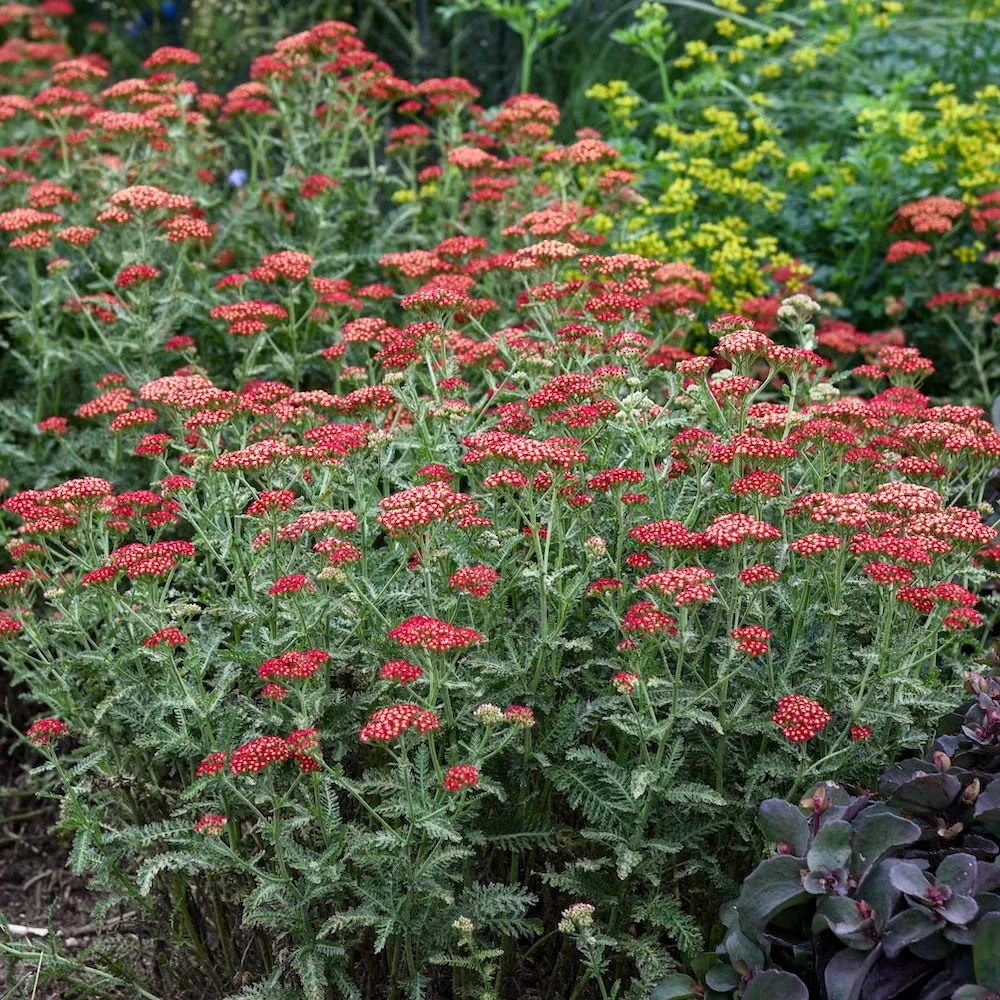
Yarrows (Achillea millefolium) are usually grown for those colorful, lacy blooms, but their foliage deserves some love too — that fernlike texture and those gray undertones are gorgeous. The 'Sassy Summer' series, including the red-flowered 'Sassy Summer Sangria' and yellow 'Sassy Summer Silver', have a really pronounced blue-silver in their leaves. Yarrows are drought tolerant once established and don't need much feeding, with winter hardiness from Zones 3 through 8.
4. Lime green foliage plants for sun
Chartreuse foliage absolutely glows in the sun and plays well with basically every other color of flower and leaf. Not all lemon- or lime-green plants can handle full sun, but there are definitely some that thrive in it.
Lemony Lace elderberry (Sambucus racemosa 'SMNSRD4') is a deciduous shrub that grows three to six feet tall and wide, and it puts out its lightest, brightest foliage in all-day sun (it'll do fine in part shade too, which is actually helpful in the South). The leaves come in with a reddish tint in spring and shift to deeper yellow tones in fall. They've got this really cool texture from those deeply cut edges, and the horizontal branches create these gorgeous layers of leafy fringe. It appreciates regular watering and thrives in Zones 3 through 8.
Want to learn more? Read about Lemony Lace elderberry.
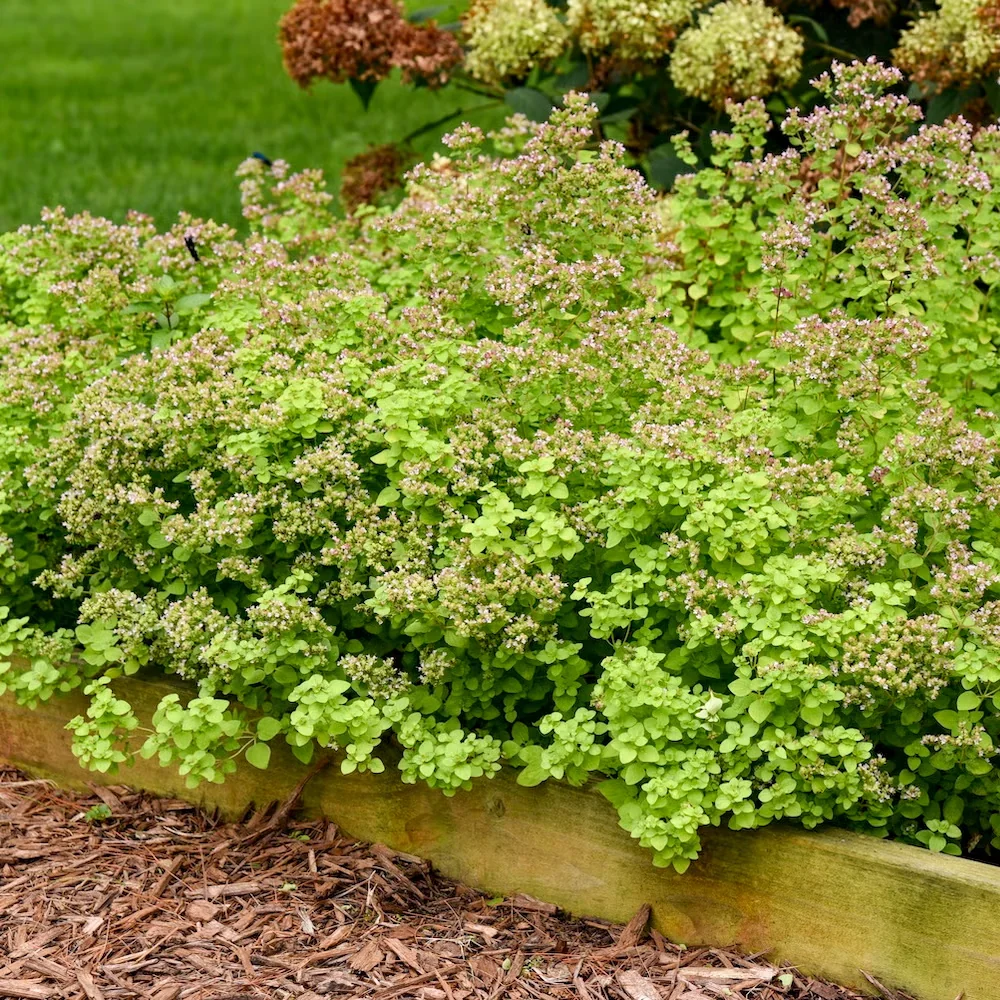
Another lime green, sun-loving option is the ornamental oregano Origanum 'Gilt Trip'. It reminds me of a compact catmint (which also comes in chartreuse options, by the way), with small, rounded leaves lining sprawling stems. Its loose, billowy habit makes it a great filler among tighter perennials. Bee-friendly purple blooms are a nice bonus from midsummer on. It likes moderate water and poor to average soil, and it's hardy in Zones 4 through 9.
Check out "The Best Garden Plants With Chartreuse Foliage" for more lime-leaved picks for sun and shade.
5. Upright spurges
The genus Euphorbia is wild — it includes species that look totally different from each other. The holiday poinsettia? That's a euphorbia. Diamond Frost, the go-to annual for summer containers? Also a euphorbia. And then there are the hardy, upright, shrubby euphorbias, commonly known as spurges, that make really good foliage plants for the sun.
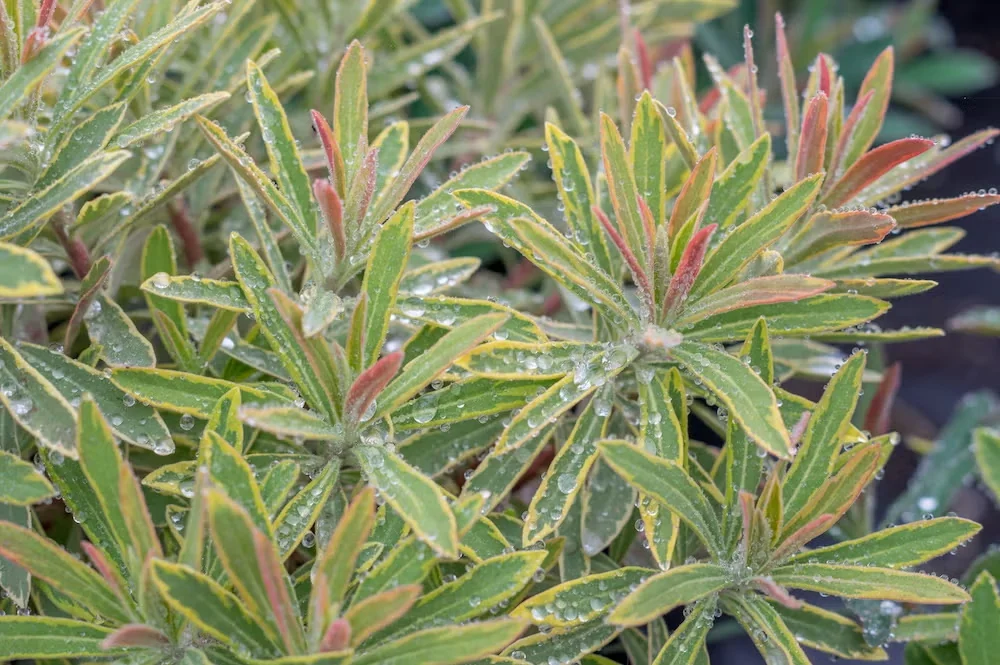
Euphorbia x martinii 'Ascot Rainbow' grows as a 20-inch clump of vertical stems lined with long, narrow leaves that are mint green with a gold edge. When the weather cools down, the newest foliage gets a pretty reddish blush. Some upright spurges need cutting back after they bloom (they put on a show of unique, brightly bracted flowers), but 'Ascot Rainbow' keeps looking great without the trim. Hardy in Zones 5 through 9, it needs excellent drainage and handles drought once it's settled in.
'Glacier Blue', often listed as a cultivar of E. characias, looks similar to 'Ascot Rainbow' except its foliage is blue rimmed in white. This evergreen perennial stays a bit smaller too, reaching just 15 to 18 inches tall. The care is the same as 'Ascot Rainbow', though it's not quite as hardy — rated for Zones 7 through 9.
Quick heads-up: All euphorbias have a sap that can irritate your skin, so definitely wear gloves when you're working with them.
6. Cannas & bananas
Finding large-leaved foliage plants for sun can be tricky. Shade lovers grow big leaves to catch as much light as they can, but in the sun there's just no need for that. Tender cannas and bananas can fill that gap though — their impressive foliage makes the extra effort to overwinter them totally worth it.
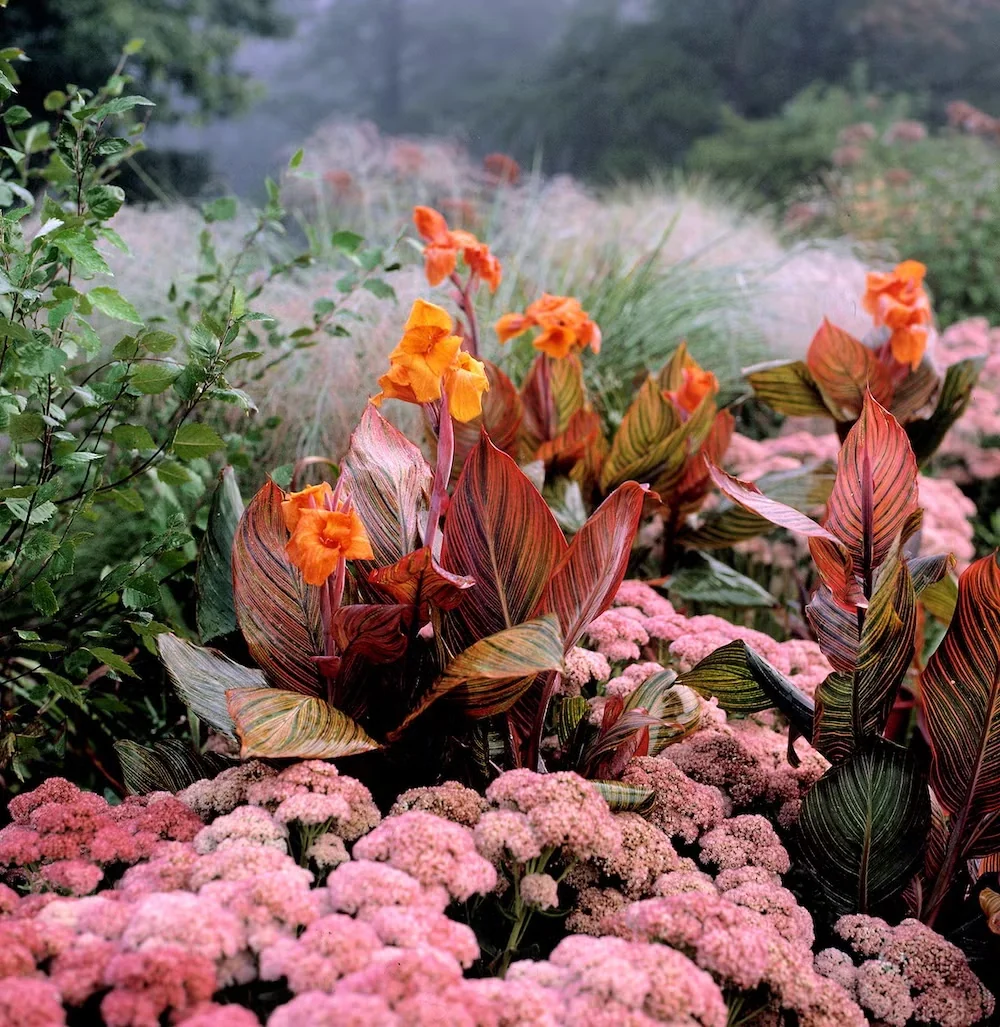
Cannas are grown for those luscious flowers and their leaves — which stand upright and come in a range of colors, sometimes several on a single plant. Cannova Bronze Scarlet gets half its name from its leaf color, a gorgeous purple-brown, and half from its brilliant red blooms. Other standout cannas for foliage include the Tropicanna series — the original Tropicanna with red, green, and purple stripes; the lemon-and-lime Tropicanna Gold; and the moody, dark Tropicanna Black. Cannas love plenty of water and will actually thrive in poor drainage. If you're colder than Zone 7b, you'll need to lift the rhizomes and store them indoors for winter.
Ornamental bananas (Ensete and Musa) are another great source of big leaves for the sunny garden. The red Abyssinian banana (Ensete maurelii) has these wild propeller-like leaves in purple-tinged green — and the more sun it gets, the more color comes out. It's only hardy to Zone 8 and warmer, and it can be stubborn about bouncing back if you dig it for winter. The solution for Northern gardeners? Grow it in a big container that you can move under cover.
7. Hardy hibiscus
There's actually a large-leaved sun lover that's perfectly hardy in most zones: hardy hibiscus, which combines traits of several North American species, including Hibiscus coccineus and H. moscheutos. Those big, bright, tropical-looking flowers are what usually grab attention, but plenty of cultivars have been bred to show off those maple-like leaves too.
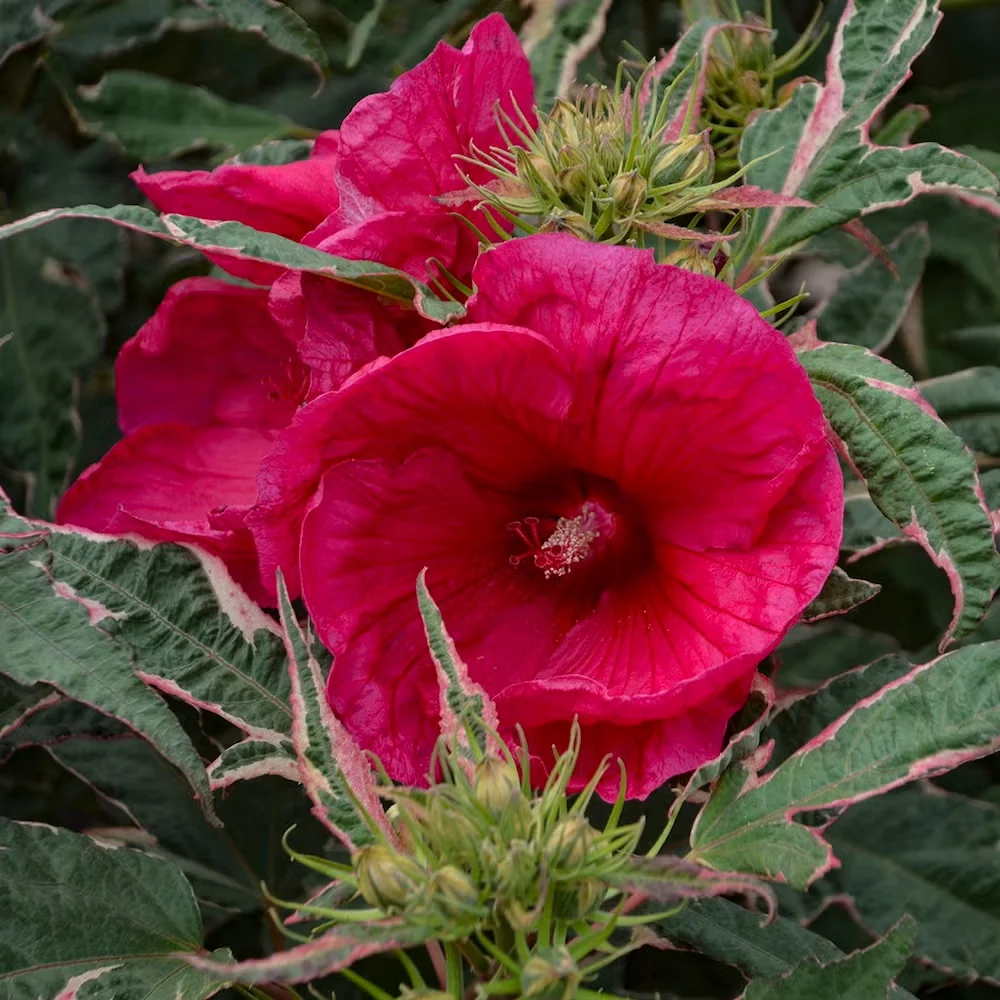
'Edge of Night' hardy hibiscus is a great example — it has super dark leaves that really make those candy-pink flowers pop. This cultivar is also more compact than older types, staying under four feet tall. 'Summer Carnival' hardy hibiscus makes a splash with variegated foliage, featuring pink and white markings along the edges of each leaf.
Since garden varieties of hardy hibiscus come from species that naturally grow in swampy areas, these bulky perennials are definitely not drought tolerant. They do best in soil that drains well but stays consistently moist, and you'll need to water during long dry spells. They're slow to get going in spring — sometimes not starting until late June in Zone 4 — but once they wake up, they grow fast. Most cultivars are hardy in Zones 4 through 9.
Read more about hardy hibiscus for the garden — it's worth it!
Image credits: 'Ascot Rainbow' spurge by Valleybrook Gardens/Public Domain. Tropicanna canna courtesy of Anthony Tesselaar Plants. All others courtesy of Walters Gardens.