“Evergreen conifers are absolute garden staples when it comes to year-round interest and structure. These easygoing, dependable shrubs and trees come in an overwhelming smorgasbord of colors,…”
Bergenia major
Conifers with Scaly Foliage Bring Soft Texture to the Garden
Evergreen conifers are absolute garden staples when it comes to year-round interest and structure. These easygoing, dependable shrubs and trees come in an overwhelming smorgasbord of colors, textures, sizes, and shapes — which, honestly, can make choosing just one feel impossible.
Lately I've been sorting conifers by their foliage type in my head. They don't have the wild variety of leaf shapes that deciduous trees and shrubs offer, but you can basically split them into two camps: the needle types you see on pines, firs, and spruces, and the flat, scale-like foliage types.
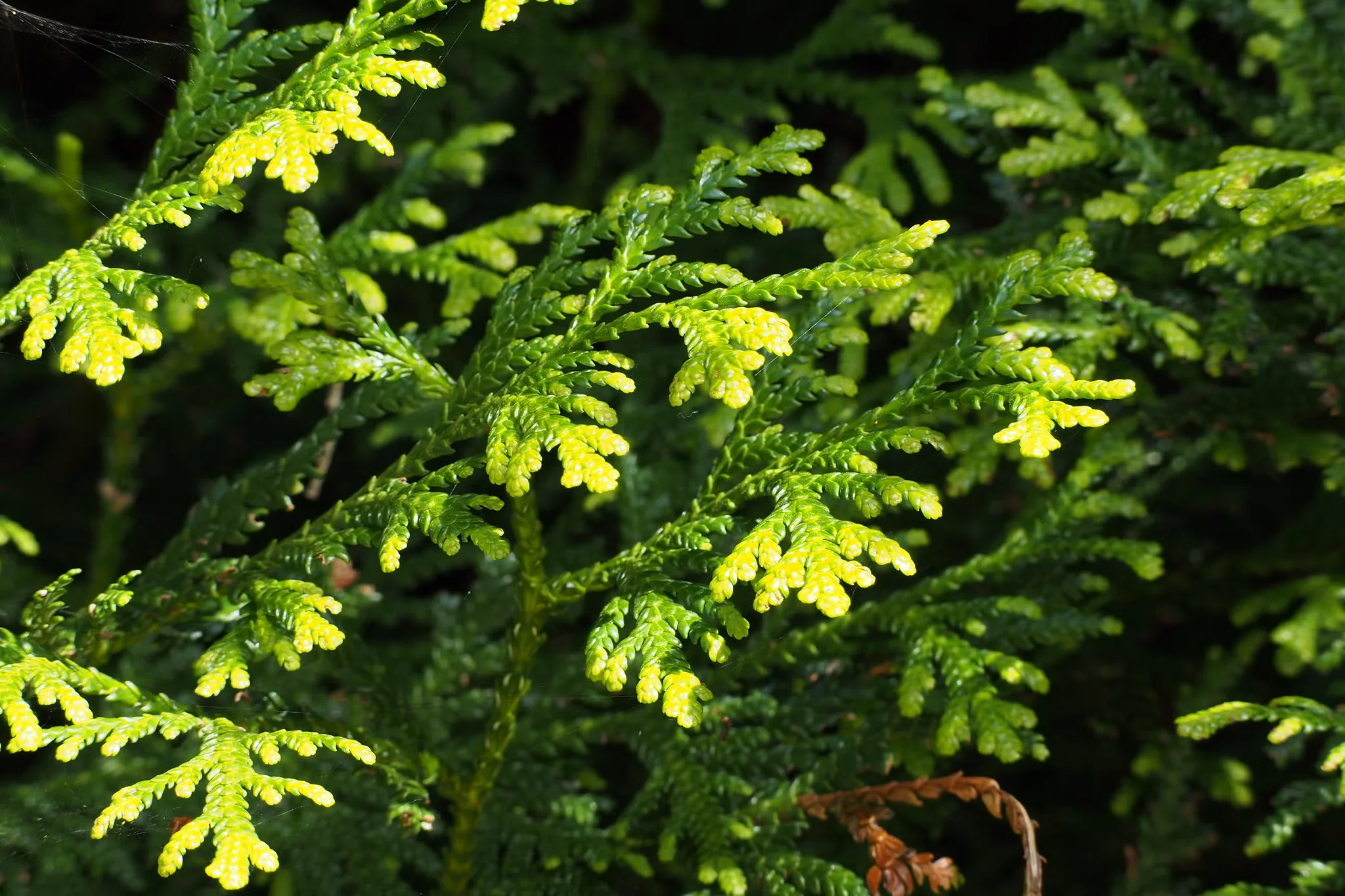
Conifers with scaly foliage mostly belong to the Cupressaceae family — that's the cypress family. The lineup includes juniper (Juniperus), false cypress (Chamaecyparis), arborvitae and false cedar (Thuja), and cypress (Cupressus), among others. Young plants in these groups might have needle-like leaves (and a few keep that look forever), but most eventually develop flat foliage with a surface that looks just like fish scales. Related: Explore all our conifer-related articles
And that detail adds a softness that really enhances the whole plant's appeal. Sam Pratt, inventory manager at Conifer Kingdom (a mail-order nursery that specializes in conifers and Japanese maples), puts it nicely: "[Needled evergreens, such as] pines and firs tend to have a rigid shape, but [junipers, false cypress and the like] are more sculptural, with an irregular shape." He points out that those fine-textured, scale-like leaves are the perfect covering for those elegant, expressive growth forms.
From cushion to column: conifer forms
Dwarf elkhorn cedar (Thujopsis dolabrata 'Nana'; USDA Zones 6–9) is one Sam recommends for its low, mounding form, dense branches, and light green scaly foliage. He even calls it "a juniper for the shade" since it does just fine in low light. (It'll also be perfectly happy in full sun as long as you're not in the Deep South.) This hassock-shaped shrub reaches about two feet tall and twice as wide over ten years.
Low-growing conifers with scaly foliage
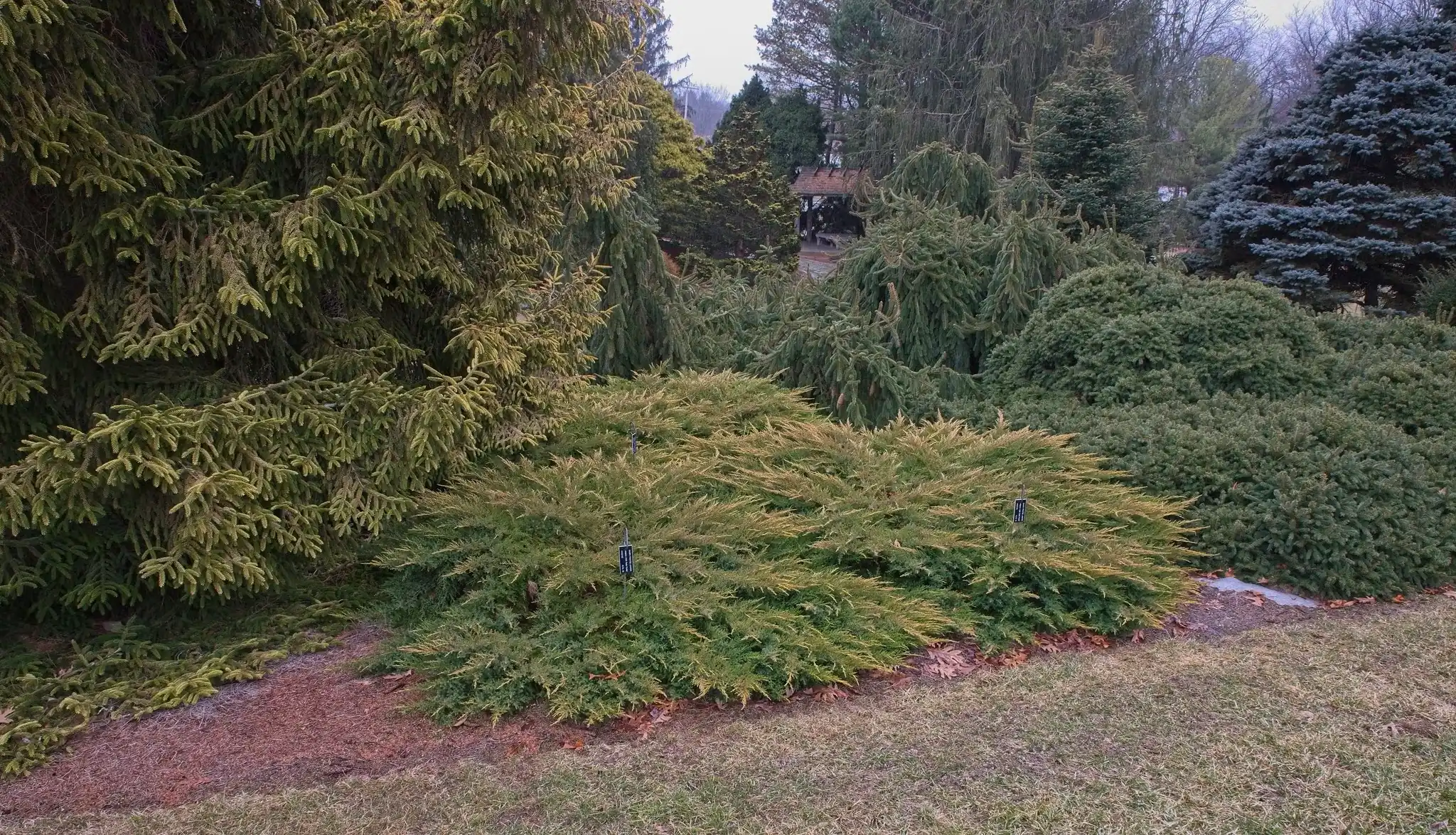
When it comes to actual junipers, Sam points to Juniperus xpfitzeriana 'Daub's Frosted' (Zones 4–9) and J. horizontalis 'Pancake' (Zones 3–9) as two easy-to-find low growers. 'Daub's Frosted' hugs the ground at just a foot tall, with branches that stretch out to six feet wide. The fingerlike sprays of foliage start out lime green and mature to blue-green, really highlighting that spreading habit. 'Pancake' is similar but stays even lower, with soft gray-blue feathery foliage.
Upright conifers with scaly foliage
Among upright junipers, the popular J. virginiana 'Taylor' (Zones 4–8) makes a fantastic stand-in for columnar Italian cypress (Cupressus sempervirens; Zones 7–10). Sam calls 'Taylor' "climate ready" since it's a cultivar of an East Coast native — it handles winter just fine and tolerates regular rainfall way better than Italian cypress. As for other tall, narrow options, he says the western native J. scopulorum 'Blue Arrow' (Zones 2–8) is catching on over the more familiar 'Skyrocket'. 'Blue Arrow' stays narrower — about two feet wide and seven feet tall in ten years — and sports a brighter blue foliage color.
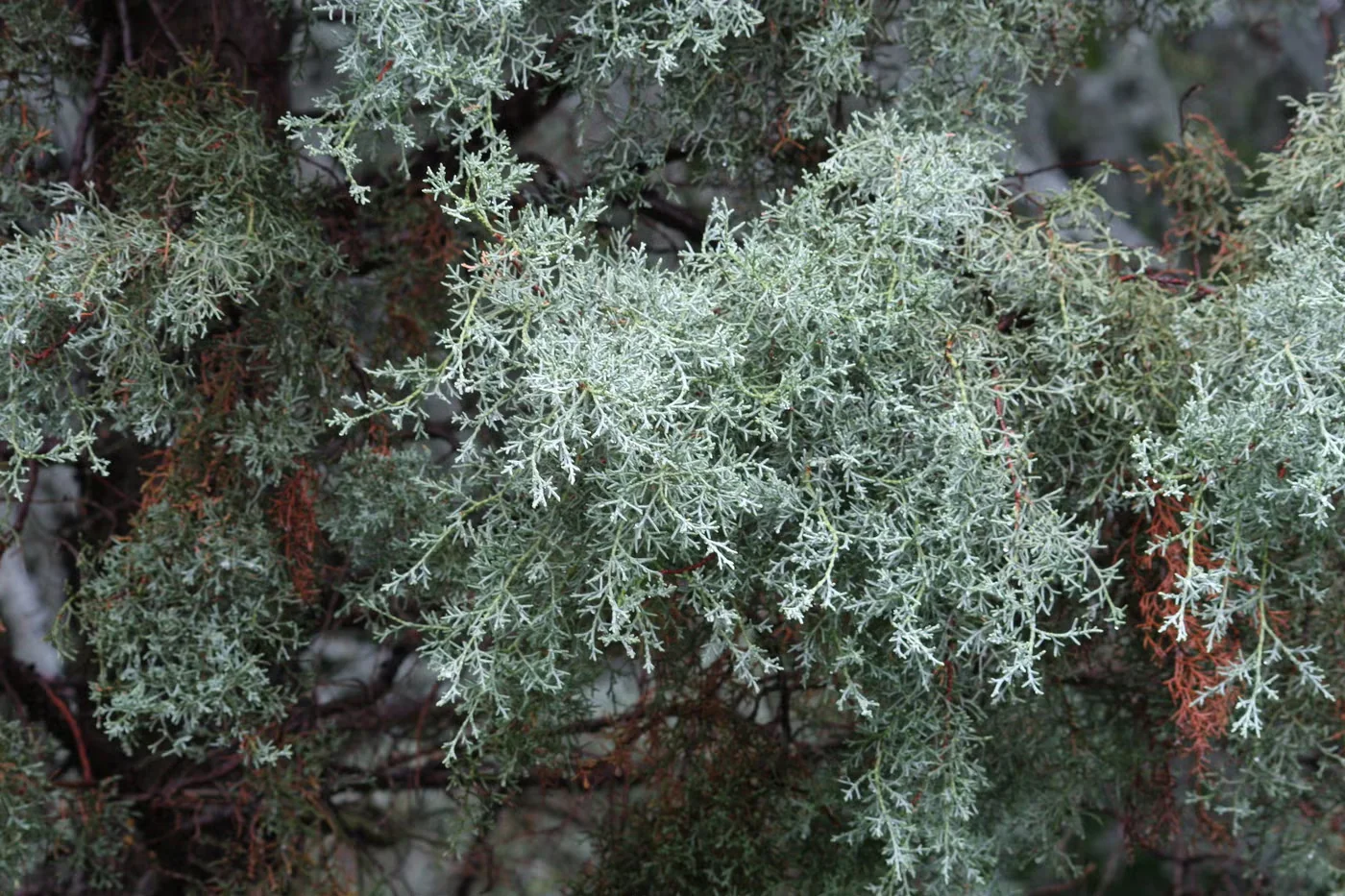
If you're gardening in a warmer climate, Arizona cypress (Cupressus arizonica) offers some really striking upright options. There's 'Sulphurea' (Zones 7–9), a 15-foot pyramidal tree with bright yellow foliage that pops against its reddish bark. 'Blue Ice' is super common, Sam says, but if you want something more interesting, look for a weeping variety like the blue 'Raywood's Weeping' (Zones 6–9), which grows tall and narrow with drooping branches that give it a wonderfully irregular silhouette.
Fantastic false cypresses with scaly foliage
Among the false cypresses (Chamaecyparis), Sam highlights 'Hage' and 'Butterball' (both Zones 5–9) — two miniatures from the species C. obtusa, better known as hinoki cypress. 'Hage' reminds me of the more familiar dwarf 'Nana' hinoki, with its swirling fans of deep green foliage tipped with lighter new growth in spring. But 'Hage' is a true mini, growing just over a foot tall and wide in 10 years.
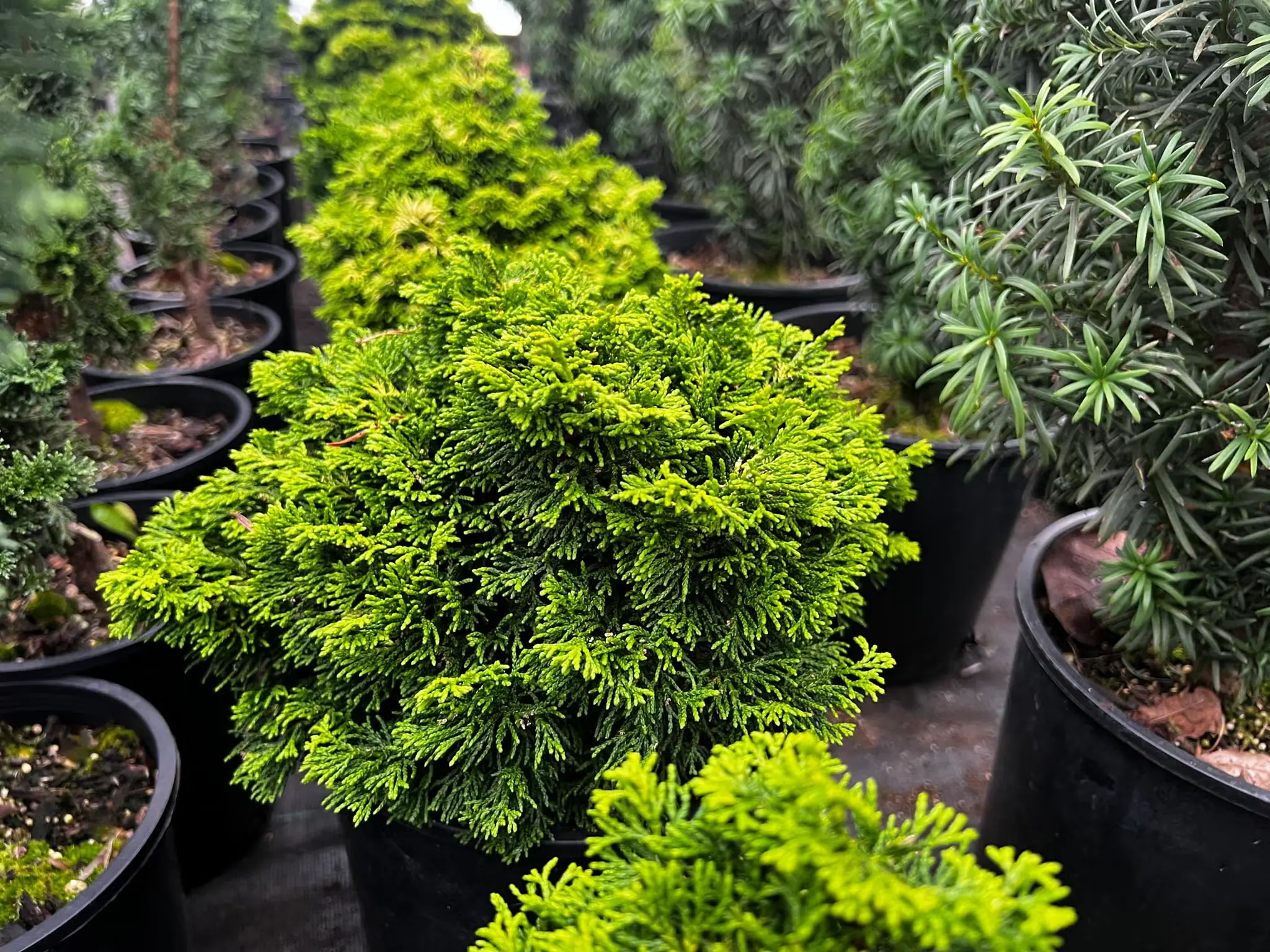
'Butterball' grows a few inches bigger, forming a two-foot globe in about a decade. What really sets this one apart is its bright chartreuse foliage, which has a shaggier texture than other C. obtusa varieties. Sam suggests tucking it somewhere it gets a bit of shade during the day.
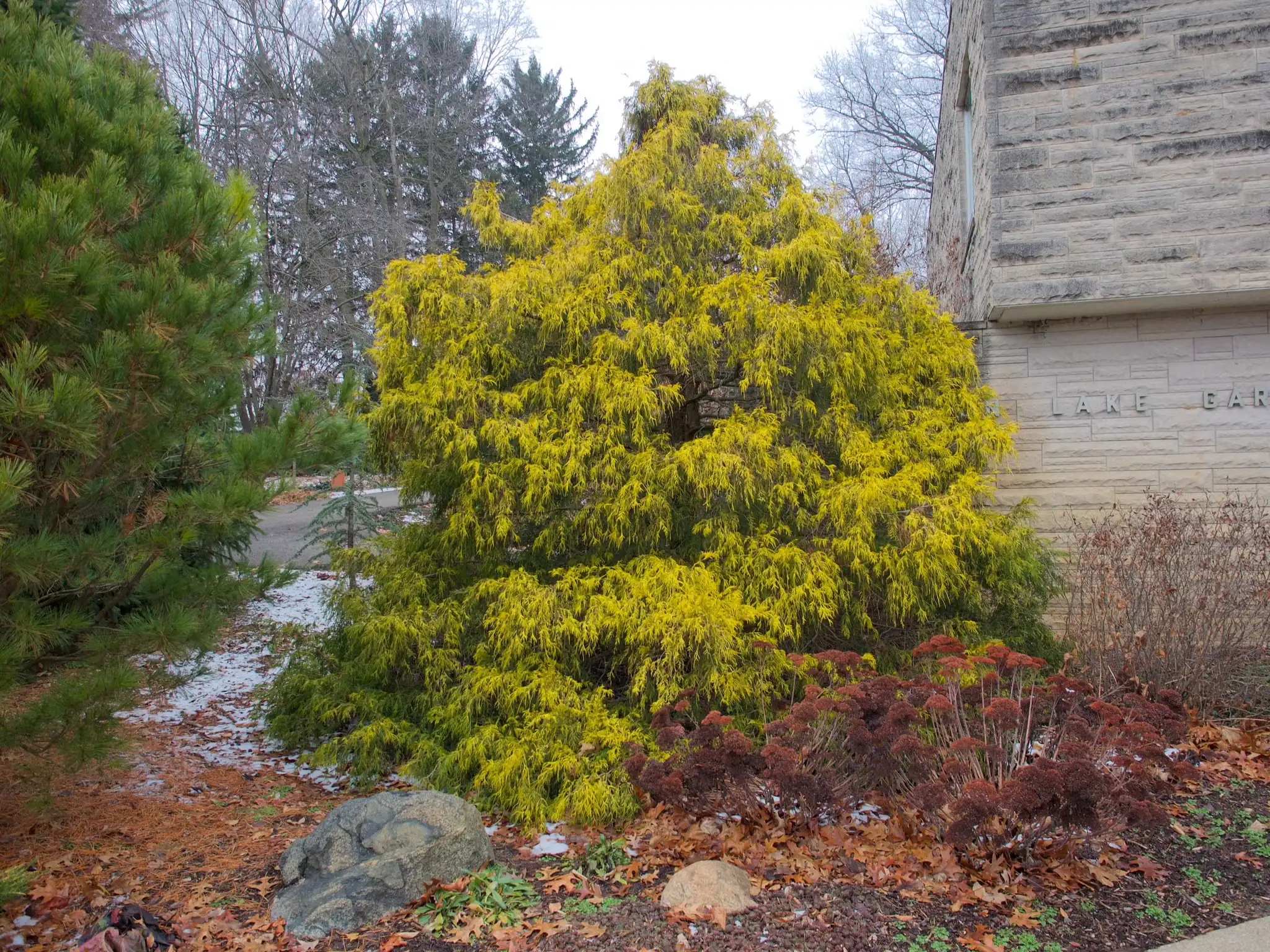
While hinoki cypress tends to grow in a rounded shape, sawara false cypresses (C. pisifera) usually take on a roughly pyramidal silhouette, with branches beautifully outlined by their soft, scaly foliage. Sam mentions 'Boulevard' (Zones 4–8) as a popular pick, beloved for its silvery blue color. It reaches about 12 feet tall and 8 feet wide at the base in 10 years.
If you want something less common and totally different-looking, Sam suggests 'Golden Pincushion' (Zones 4–9), a cute miniature that only reaches a foot tall over 10 years. Its vivid yellow foliage plus that tiny size make it a natural for rock gardens or trough plantings. It's happy in full sun or part shade.
Awesome arborvitae
"Emerald Green is so common!" Sam can't help but blurt out when it comes to arborvitae, or red cedar (Thuja). He likes to steer gardeners toward more exciting options, like T. occidentalis Sienna Sunset, or 'Anniek' (Zones 4–8). This is a selection of the eastern North American species — a colorful, rounded dwarf that reaches just 10 inches tall and wide in as many years. It has green foliage highlighted with amber and yellow new growth. The leaves are more needle-like than scaly, but it's still a stunner.
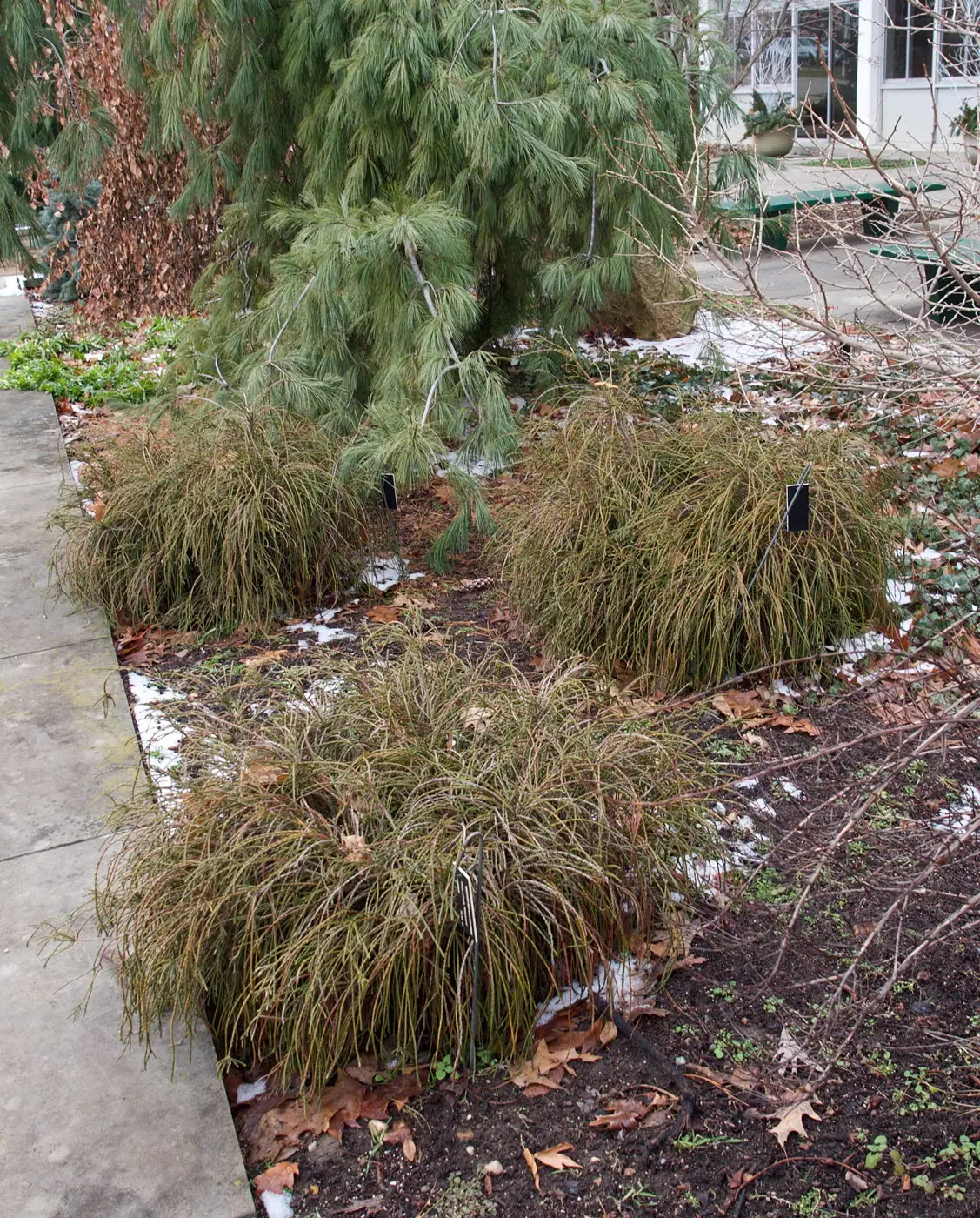
If you're after that scale-like foliage, Sam recommends 'Grune Kugel' (Zones 5–8), a cultivar of the Western-native T. plicata. True to its name — which translates to "Green Ball" — this plant grows into a three-foot-round shrub with swirls of long, flat, feathery foliage in a velvety green. And here's a fun one: 'Grune Kugel' has a wild cousin called 'Whipcord' (Zones 5–8). While 'Grune Kugel' is pretty refined, 'Whipcord' just lets loose with exuberant tassels of skinny foliage exploding from its arching branches. This three-foot spreader looks like nothing you'd expect from a Thuja.
Companion plants for conifers with scaly foliage
Scale-leaved conifers are so much fun to mix and match with companion plants. Try pairing them with needled conifers for a great foliage contrast. Stick with similar colors for a subtle, harmonious look, or go bold by pairing blue and gold foliage together.
That scaly foliage looks gorgeous next to broad-leaved evergreens — especially in winter when everything else is bare. Or try tucking in a deciduous shrub with coarse foliage, like oakleaf hydrangea (Hydrangea quercifolia), to play off the conifer's ferny, fine texture.
Like any evergreen, these conifers serve as a beautiful backdrop for flowering perennials during the growing season, then keep the show going through winter. You can also keep things foliage-focused in the warmer months by choosing low-growing perennials with interesting leaves — whether grassy or broad, like lamb's ears (Stachys byzantina 'Helen von Stein').
Photo credits (top to bottom): Thujopsis by harum.koh/CC BY-SA 2.0 'Daub's Frosted' juniper by F.D. Richards/CC BY-SA 2.0 Arizona cypress foliage by Sage Ross/CC BY-SA 2.0 'Butterball' false cypress by Megan Hansen / CC BY-SA 2.0 'Filifera Aurea' sawara cypress by F.D. Richards/CC BY-SA 2.0 'Whipcord' arborvitae by F. D. Richards/CC BY-SA 2.0/Flickr.com