“Let's face it — conserving water in the garden is becoming a real challenge across more and more of the United States. Places like California, the Southwest, and Texas have always been dry, but now…”
Narcissus flavescens
Drought-Tolerant Plants: An Expert Gardener's Top Choices
Let's face it — conserving water in the garden is becoming a real challenge across more and more of the United States. Places like California, the Southwest, and Texas have always been dry, but now lots of other areas are dealing with extended dry spells during the growing season too. That's why more and more of us are turning to drought-tolerant plants for our ornamental beds.
Here are a few of my personal favorites — plants that not only tough out dry stretches but look absolutely gorgeous doing it:
Sedums: Super Succulents
When you think drought-tolerant plants, succulents probably jump to mind first — and for good reason. Their plump leaves and stems are basically built-in water tanks. Sedums are part of that club, and there are literally hundreds of species and cultivars to choose from.
One that really stands out is 'Angelina' stonecrop (Sedum rupestre 'Angelina'; USDA Zones 5–9), which snagged the Pennsylvania Horticultural Society's Gold Medal Award as a top ornamental plant for the Mid-Atlantic. Its narrow succulent leaves glow a bright golden yellow all season long, and in many climates they stay evergreen — so you get winter color too.
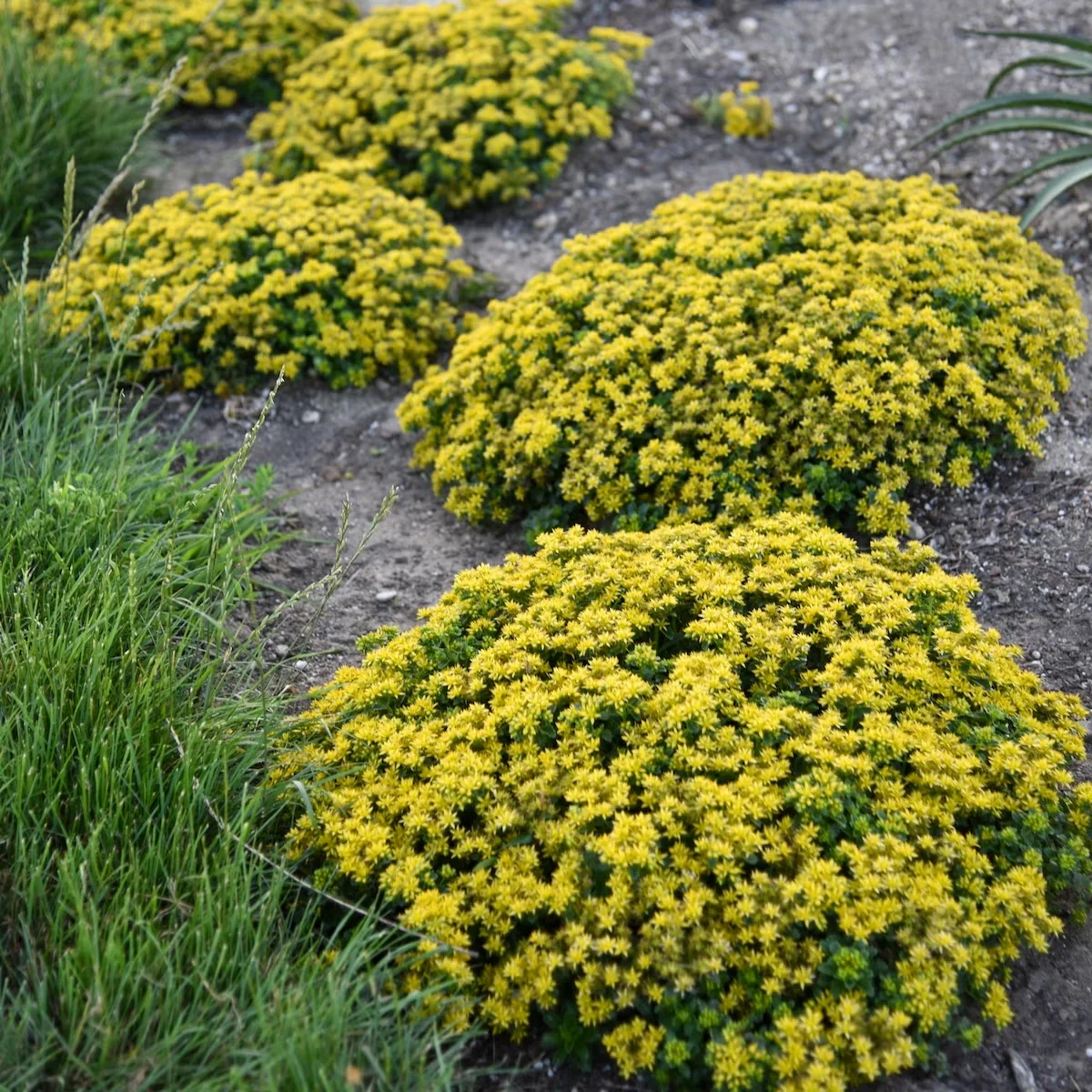
Forming a ground-hugging mat one to two feet wide, 'Angelina' is grown mostly for that incredible foliage. The hybrid S. 'Little Miss Sunshine' (Zones 3–9) brings really lovely golden-yellow flowers to the party in early summer. When it's not blooming, you get very dark green foliage and a mounding, spreading habit.
Both 'Angelina' and 'Little Miss Sunshine' stay under six inches tall, but if you want something with more height, there are taller sedums too. The hybrid S. 'Purple Emperor' (Zones 3–7) stands upright to about 15 inches with gorgeous dark purple foliage — perfect for the front of a perennial border, where it contributes flat clusters of tiny pink-purple flowers in late summer and fall. And like all sedums, it's a pollinator magnet.
Low-Water Euphorbias
Euphorbias are right at home in Mediterranean-type climates around the world — places with low rainfall and well-drained soil. I grow several different euphorbias in my own gravel garden at home, where the granite gravel is four to six inches deep, and they thrive.
The burrow-tail euphorbia (Euphorbia myrsinites; Zones 4–8) has these striking chartreuse flowers in early spring that look amazing against its blue-gray leaves on stems that sprawl along the ground. In my garden, it self-sows throughout the gravel — which I kind of love, and if I don't want it somewhere, I just yank the seedlings. (A heads-up, though: Euphorbia myrsinites is listed as invasive in New Mexico, Utah, Oregon, and Washington.)
'Miner's Merlot' (Zones 6–9) and Blackbird ('Nothowlee'; Zones 6–9) are both hybrid euphorbias that grow as clumps of upright stems cloaked in purple leaves. Come spring, sprays of yellow flowers top the foliage, and both can reach about two feet tall. As the season goes on, the leaves shift to a maroon-tinged olive green.
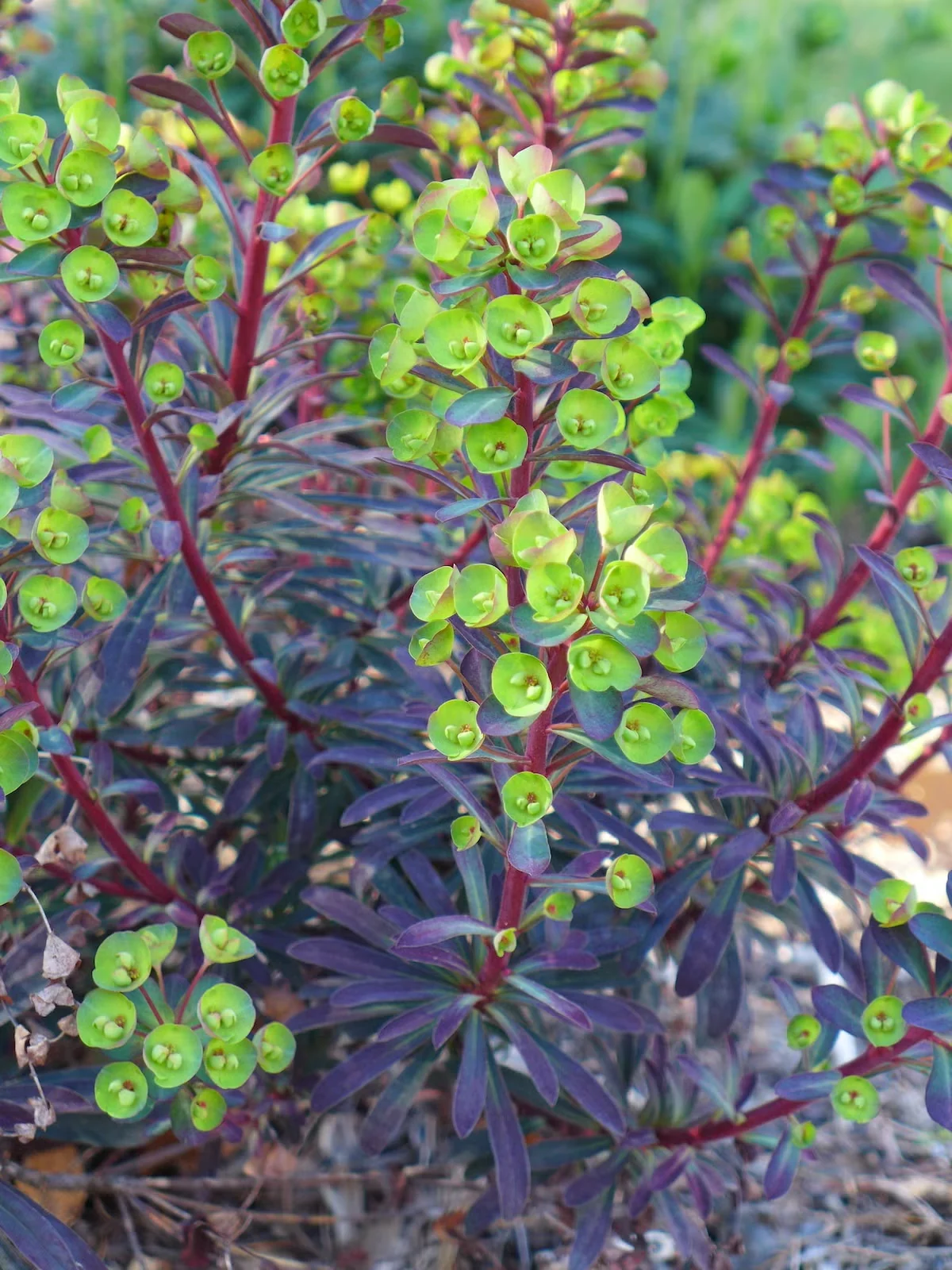
Over at Pennsylvania's Chanticleer garden, the gravel garden features the very architectural Mediterranean spurge (E. characias subsp. wulfenii; Zones 6–8). In California, this euphorbia can reach almost shrub-like proportions; in eastern Zone 7 gardens, it still makes a real statement once established. It sends up stout upright stems topped with large clusters of those striking chartreuse flowers in early spring. In the East, though, it really needs excellent drainage and protection from wet winter conditions.
Beyond being drought-tolerant, all euphorbias have a milky sap that makes them genuinely deer resistant — the deer just won't touch them. But fair warning: that same sap can irritate your skin, so definitely wear gloves when you're working around them.
Prairie Perennials Resist Drought
Those deep-rooted flowering perennials and grasses from the Midwestern prairies are champs at riding out dry spells. There have been some truly outstanding ornamental grass selections over the years.
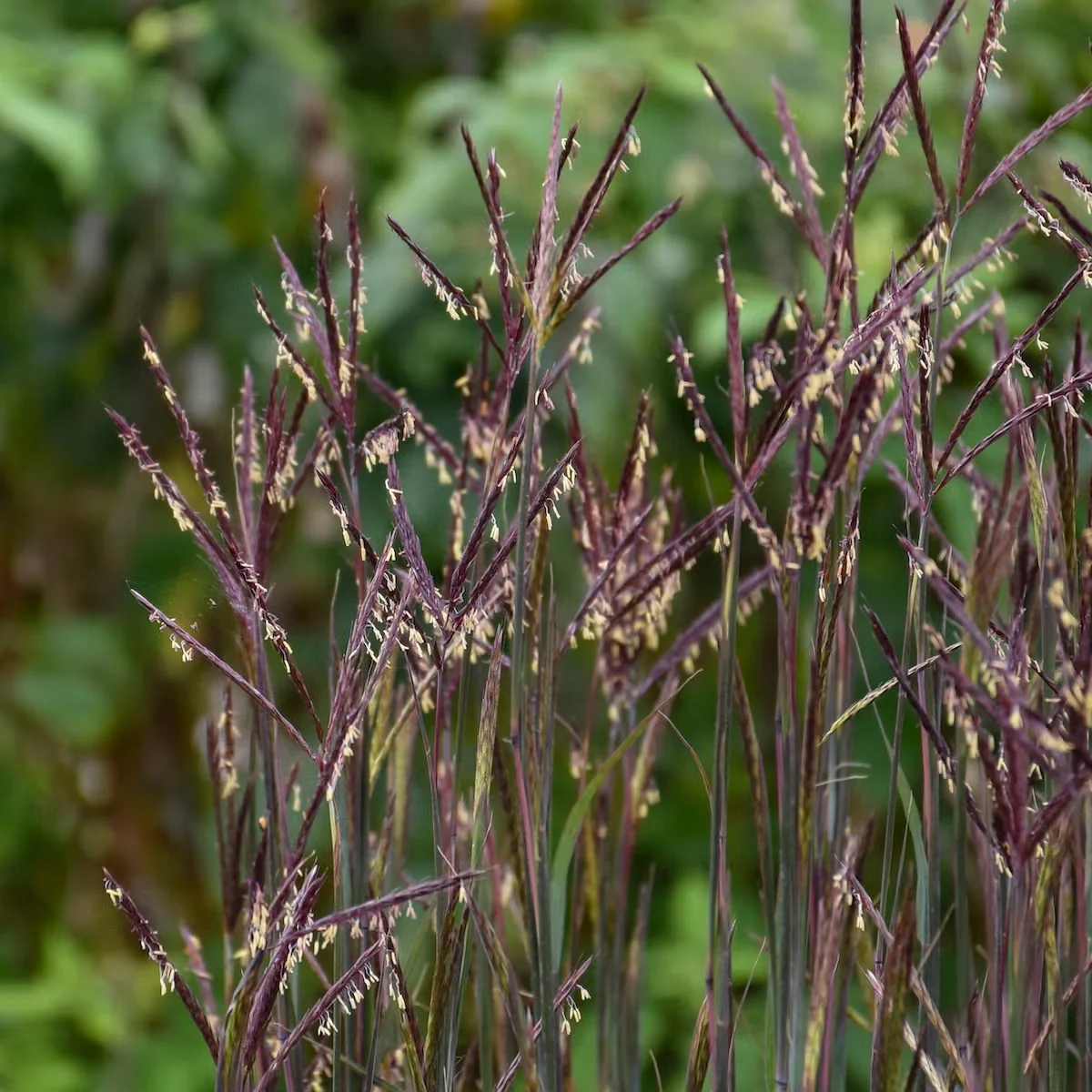
Garden designer Jeff Epping — often called the "gravel guru" — is a big fan of little bluestem (Schizachyrium scoparium; Zones 3–10) and uses it in his designs all the time. (It was actually named Perennial Plant of the Year in 2022.) As the name suggests, the upright foliage is blue — but it can also pick up hints of pink and red. In fall it turns a fiery orange-red, and this two-to-three-foot-tall grass holds its shape through most of winter. If you want something bigger, there's 'Blackhawks' big bluestem (Andropogon gerardii; Zones 3–9), an award-winning selection — including Perennial Plant of the Year for 2026 — that reaches four to five feet tall with striking deep purple upright foliage. Both big and little bluestem pair beautifully with flowering perennials like amsonia, parthenium, milkweeds (Asclepias), and false indigos (Baptisia).
Among the flowering drought-tolerant prairie plants, the selections and hybrids of deep-rooted Baptisia australis (Zones 4–9) really stand out. In mid-spring, upright stems covered in pea-like flowers emerge, often towering right over the foliage. To say baptisia has had a renaissance in the garden world would be a huge understatement — plant breeders have been doing amazing things with this genus.
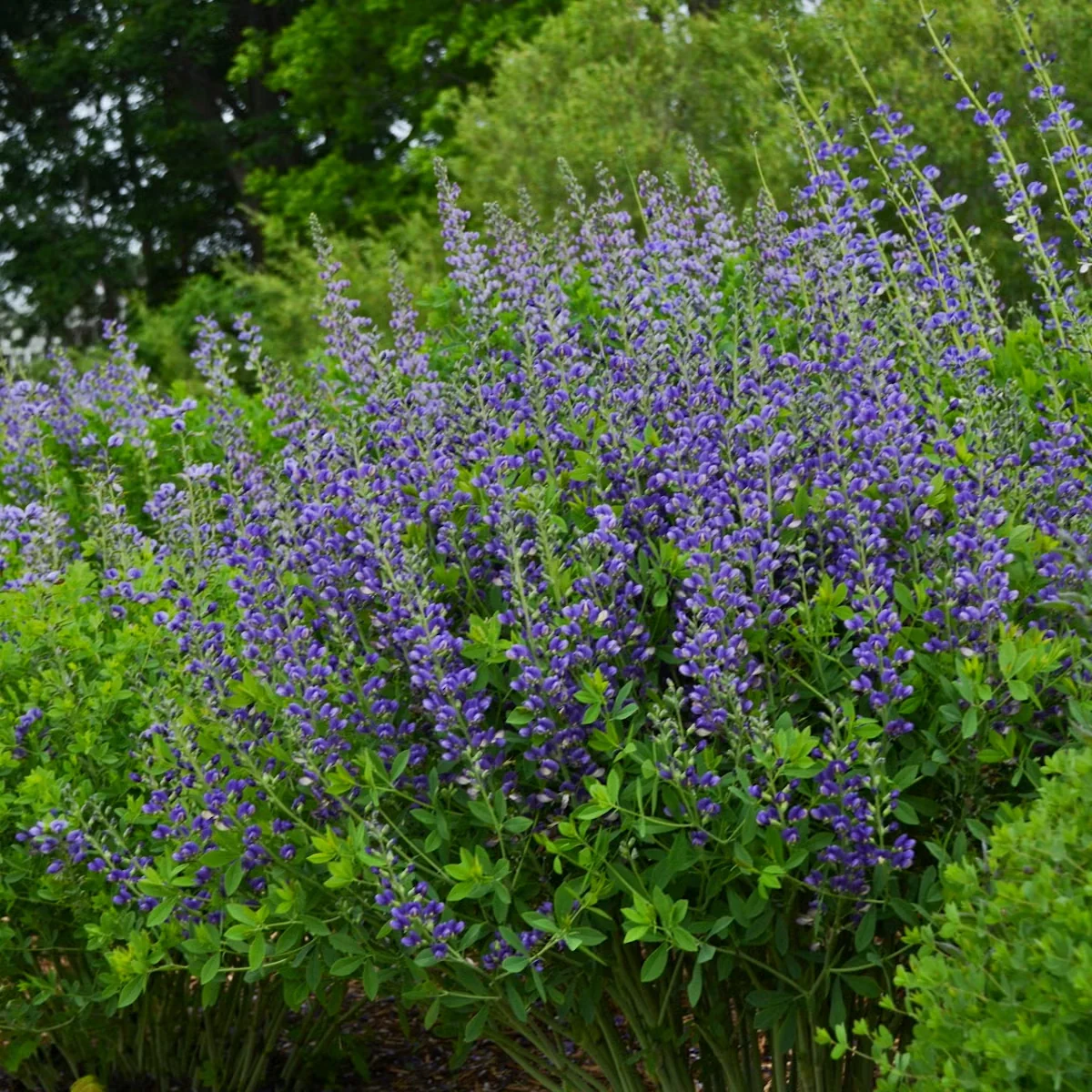
The Chicago Botanic Garden has spent the last 30 years running extensive baptisia trials and evaluations. Their top picks include 'Lemon Meringue' with clear yellow flowers, the blue-flowered 'Blueberry Sundae', 'Cherries Jubilee' with its burgundy-and-yellow bicolor blooms, and the soft blue 'Lunar Eclipse'. After flowering, baptisias often develop black seed pods that rattle in the wind — a lovely touch of late-season interest.
Drought-Tolerant Shade Trees
There are a handful of truly outstanding trees that can handle drought along with other tough conditions. At the Pennsylvania Horticultural Society, we champion two native oaks: the swamp white oak (Quercus bicolor; Zones 3–8) and the bur oak (Q. macrocarpa; Zones 3–8). Both have a wide native range, develop a beautiful picturesque habit as they mature, and turn yellow to gold in fall. Both have proven they can take whatever the city throws at them.
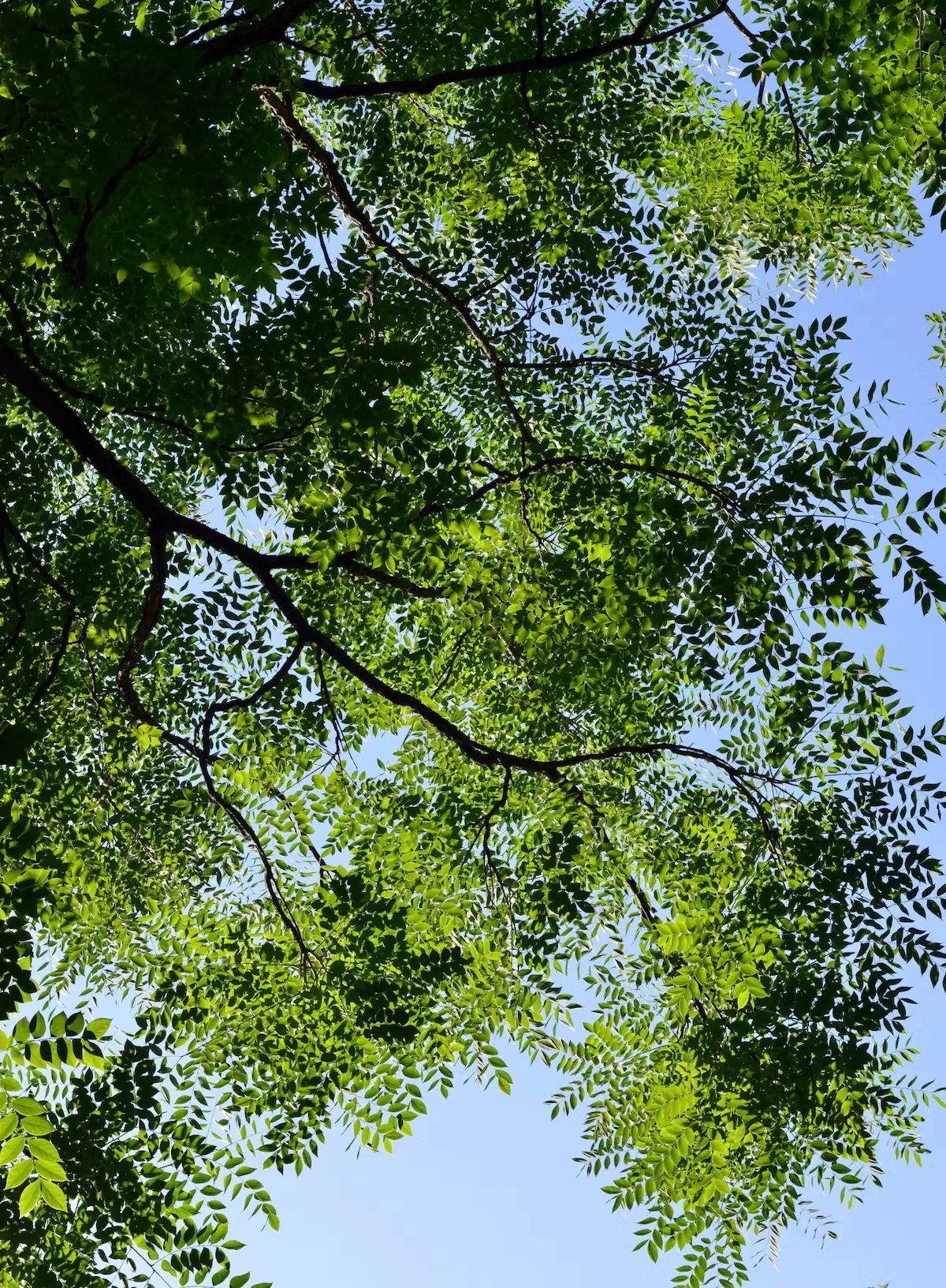
Used widely across the Midwest and East, the Kentucky coffeetree (Gymnocladus dioicus; Zones 3–8) is another tough customer. When it's young it can look a bit gangly and awkward, but give it time and it develops this gorgeous architectural upright canopy. The large compound leaves have small leaflets that create a light, dappled shade underneath. Female trees produce stout pods that can be messy, so most people go with a male selection like 'Espresso'.
Image credits, top to bottom: Courtesy of Walters Gardens; Scott Zona/CC BY-NC 2.0/Flickr.com; Courtesy of Walters Gardens; Courtesy of Walters Gardens/Plant Image Library/CC BY-SA 2.0/Flickr.com