“Is there a more versatile tree than crabapples (Malus)? These ornamental wonders are some of the most popular garden trees out there, delivering multi-season interest in all shapes and sizes.”
Dahlia caerulea
Crabapples: Classic Spring-Flowering Trees for Any Garden Space
Is there a more versatile tree than crabapples (Malus)? These ornamental wonders are some of the most popular garden trees out there, delivering multi-season interest in all shapes and sizes.
And they just keep getting better! New varieties bring disease resistance to apple scab and other problems that have plagued these members of the rose family (Rosaceae). But let's not forget the classics — those varieties whose spring blooms have earned them a permanent spot on the favorites list of gardeners and pollinators alike.
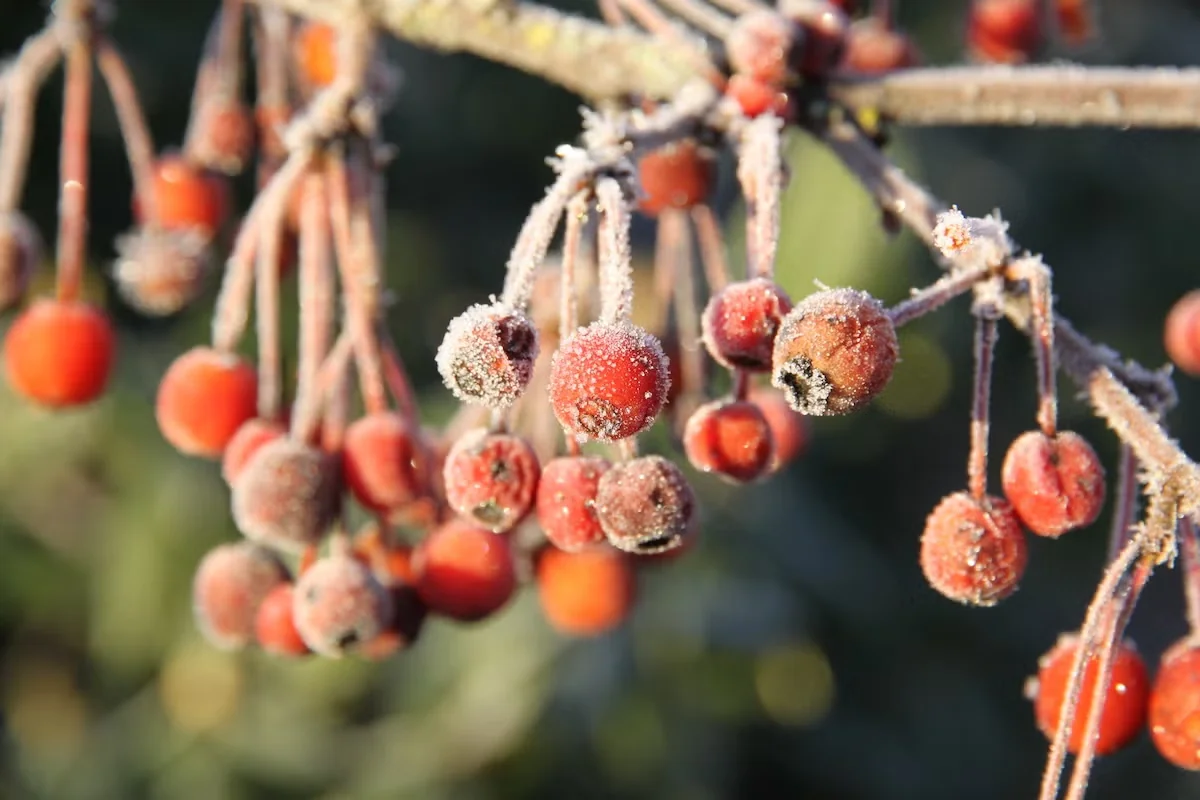
Of course, fruit is always a hot topic with crabapples. Lots of gardeners love the colorful little pomes because they attract wildlife — especially songbirds — and add winter interest. Others would rather not deal with dropped fruit making a mess of sidewalks and lawns. Whatever your preference, there's a variety for you, because you can find both heavy-fruiting and fruitless crabapples!
How to grow crabapples
Soil: Crabapples aren't too fussy — they tolerate a range of soils, but they perform best in well-drained, moderately fertile, slightly acidic ground.
Water: Fairly drought tolerant once established.
Pruning: Prune in late winter (before growth starts) to keep good airflow through the canopy. Never remove more than a quarter of the canopy in one year. Thin things out by taking out water sprouts (those thin, weak, vertical shoots), dead or damaged wood, and branches that grow inward or rub against each other. And cut off any suckers at the tree's base.
Diseases: Apple scab, cedar apple rust, fireblight, and powdery mildew are the main concerns. Many cultivars have been bred to resist these diseases. Good air circulation and moderate watering can help keep mildew at bay. Cedar apple rust is tricky — it needs two different hosts: a juniper (usually eastern redcedar, or Juniperus virginiana) plus an apple, crabapple, hawthorn (Crataegus), or quince (Cydonia oblonga). The two hosts can be up to a mile apart, so planting resistant varieties is really your best bet.
Top 10 varieties
From tall and upright to short and weeping, there's a crabapple for every spot. If you're short on space, these trees add a natural look in small groups or as a single specimen. I've had the pleasure of working with crabapples for several years, and here are 10 that really stand out:
Small crabapples
Sargent Tina (Malus sargentii 'Tina'): Need a small specimen? Sargent Tina has you covered. Maturing at just 5 feet tall and 6 feet wide, it's the most petite crabapple on the market. Profuse fragrant white blooms and red fall fruit really catch the eye. USDA Zones 4–8. Image by Peter Stevens/CC BY 2.0.
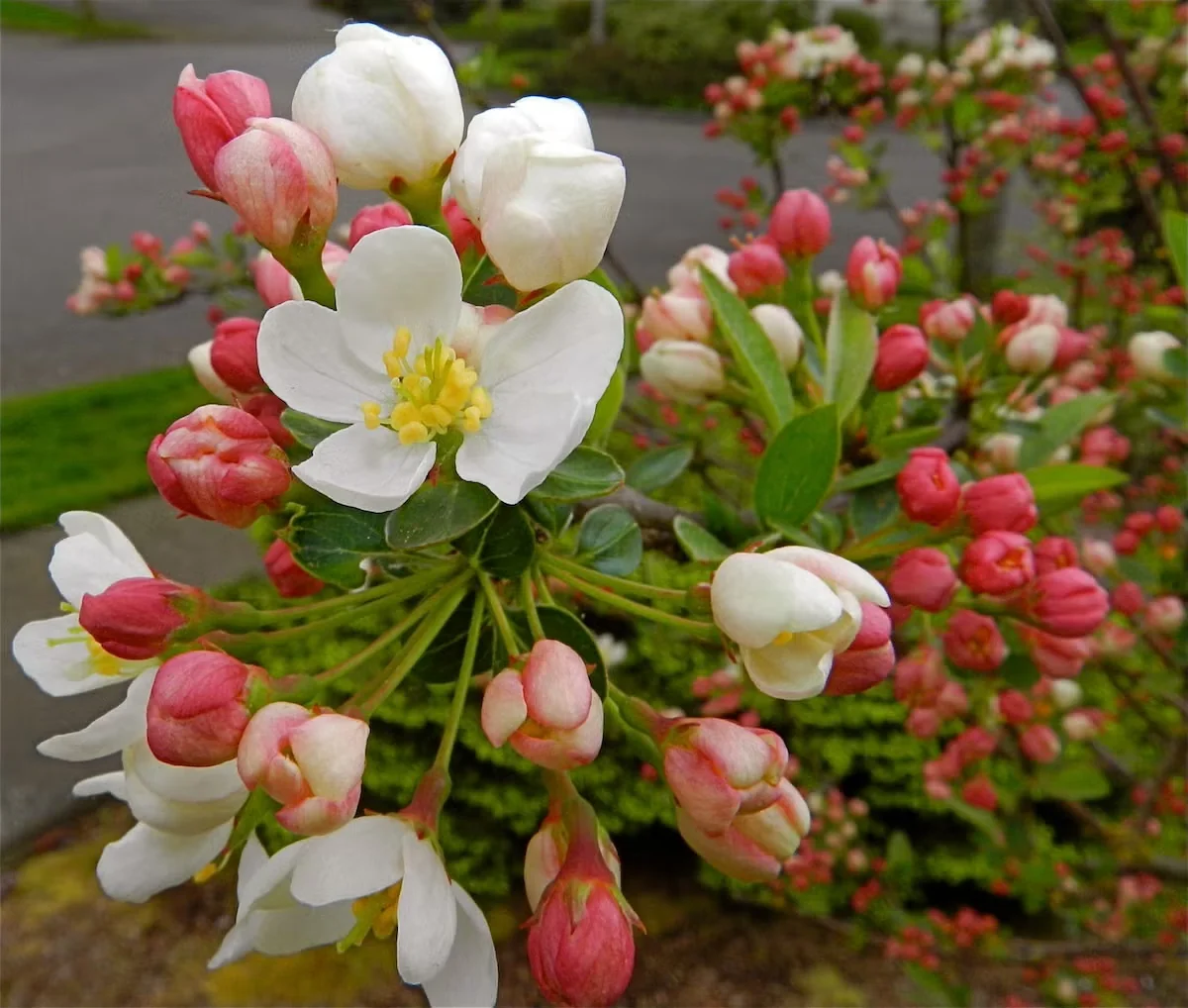
Firebird® (Malus sargentii 'Select A'): This compact tree was picked for its gorgeous white flowers and bright red fruit. And the fruit hangs on all winter — or until the birds grab it! When young, Firebird grows upright, but it spreads out as it matures. Slow growing, it reaches about 8 feet tall with a 12-foot-wide crown. It shows excellent resistance to apple scab and fireblight. Zones 4–8. Image courtesy of J. Frank Schmidt & Son, Co.
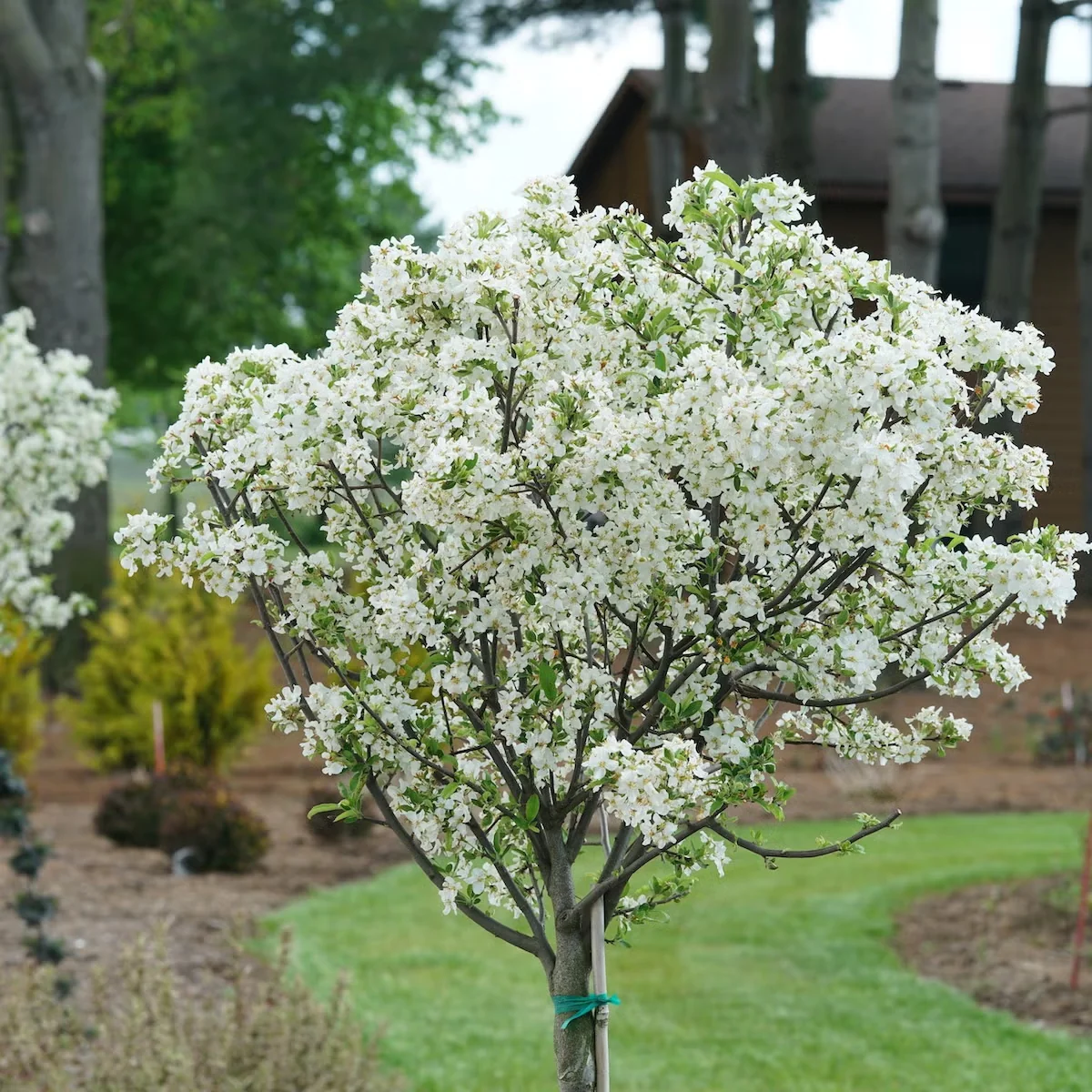
Lollipop (Malus x 'Lollizam'): Looking for a formal tree for a tight space? Lollipop is a wonderful choice. It has a naturally globe-shaped canopy that stays 10 feet high and 10 feet wide. It does produce red fruit, but the real highlights are the white blooms and tidy branch structure that give you year-round architecture. Impressive disease resistance too. Zones 4–8. Image courtesy of Proven Winners.
Varieties with interesting growth habit
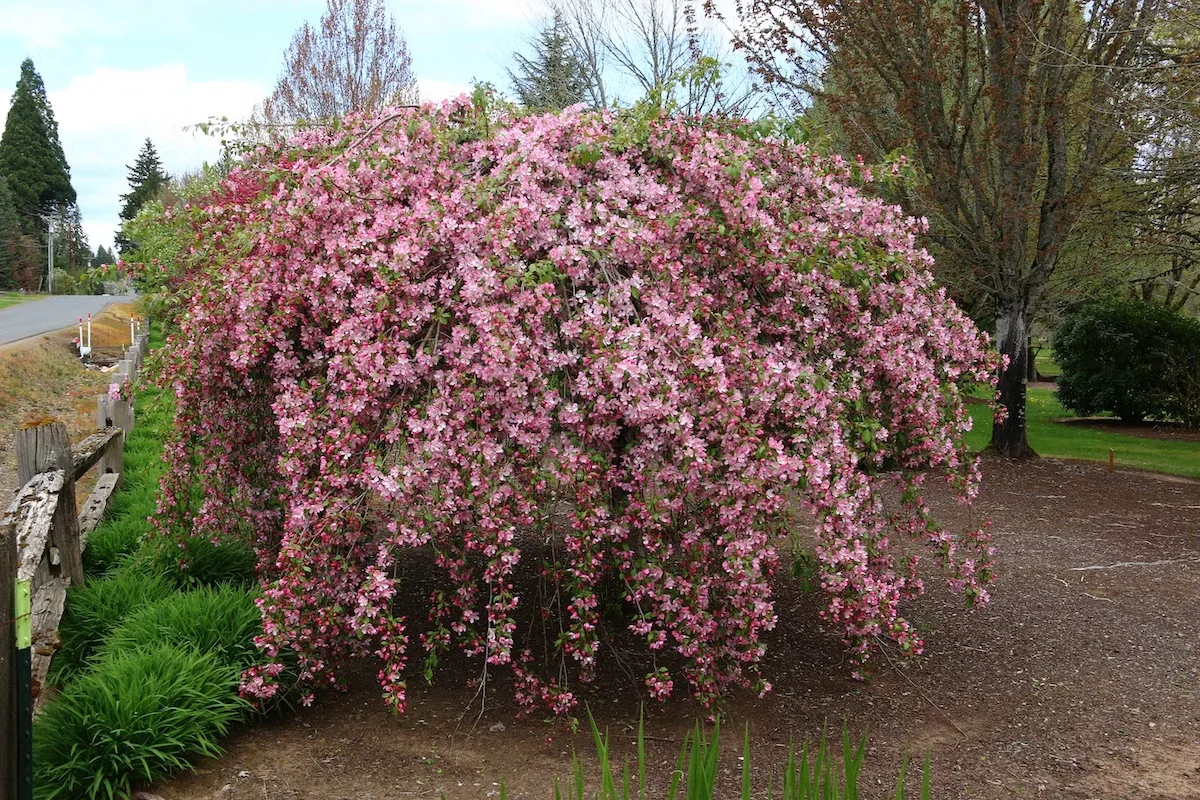
'Louisa' (Malus 'Louisa'): Few colors turn heads like pink, especially in spring. And Louisa goes the extra mile with a distinctive weeping habit that looks gorgeous almost anywhere. It's beautiful on its own or mixed with perennials and small shrubs. It needs a bit of space at 10 feet tall and 12 feet wide, but it's still a top pick among dwarf crabapples. Zones 4–8. Image courtesy of J. Frank Schmidt & Son, Co.
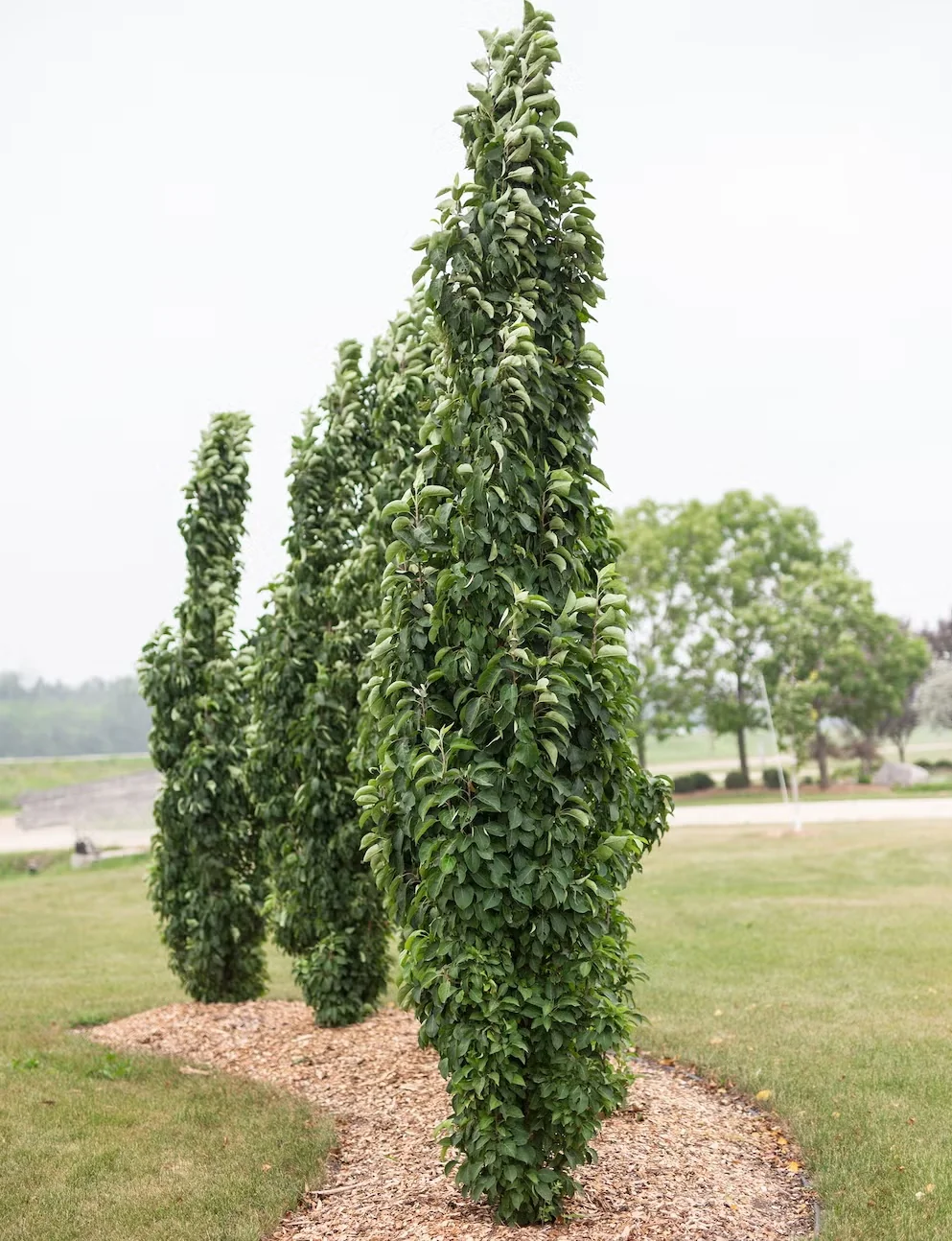
Green Wall Spire (Malus x adstringens 'Jefwall'): Looking for a tall, narrow hedge? This newer crabapple from First Editions has a columnar habit with multi-season interest, including pink buds that open into white flowers. It grows 18 to 20 feet tall but only 5 to 6 feet wide — making it a really unique option for adding privacy. As a bonus, the tree holds onto its fruit in winter instead of dropping it. Zones 2–8. Image courtesy of First Editions Shrubs & Trees.
Adirondack (Malus 'Adirondack'): Last spring I visited the Green Bay Botanical Gardens and was completely captivated by their display of 'Adirondack' crabapples. The trees surround a circular patio and form a wall of white blooms — stunning. While the flowers grabbed my attention, each tree's elegant shape was just as intriguing. Reaching 18 feet tall and 10 feet wide, its vaselike crown leaves room for creative underplanting. An award-winning introduction from the US National Arboretum, it delivers orange-red fruit and excellent disease resistance. Zones 4–8.
Crabapples with good foliage and fruit
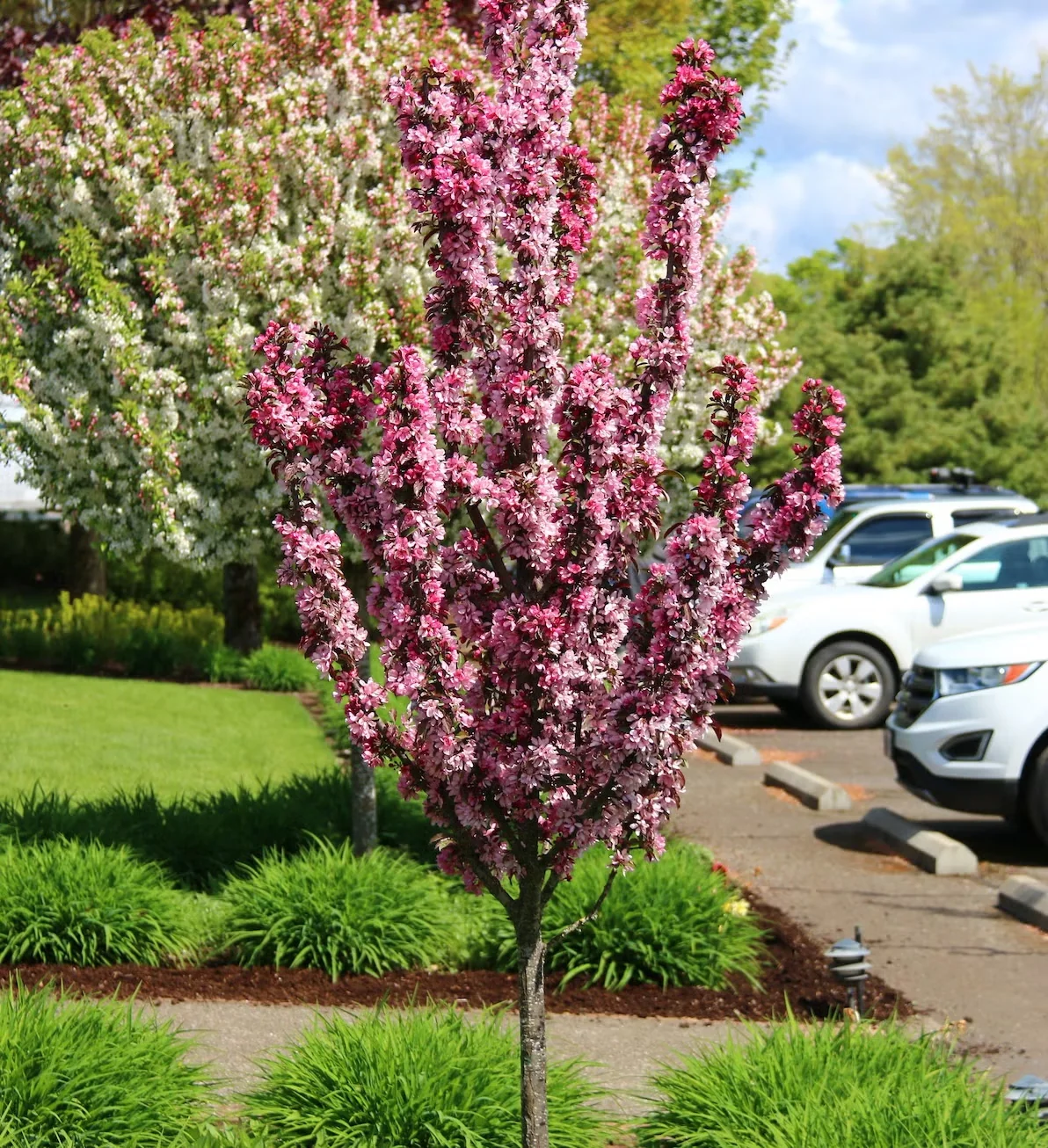
Raspberry Spear® (Malus 'JFS KW213MX' PP 31076): This newer pick goes beyond the flowers to give you colorful summer foliage too. In spring, the crown is covered in bright magenta blossoms that give way to dark purple leaves. As winter approaches, the foliage shifts to bronze and then orange, with deep red fruit lingering on the tree for continued interest. Raspberry Spear keeps a tightly columnar habit, reaching 20 feet tall and 8 feet wide. Zones 4–8. Image courtesy of J. Frank Schmidt & Son, Co.
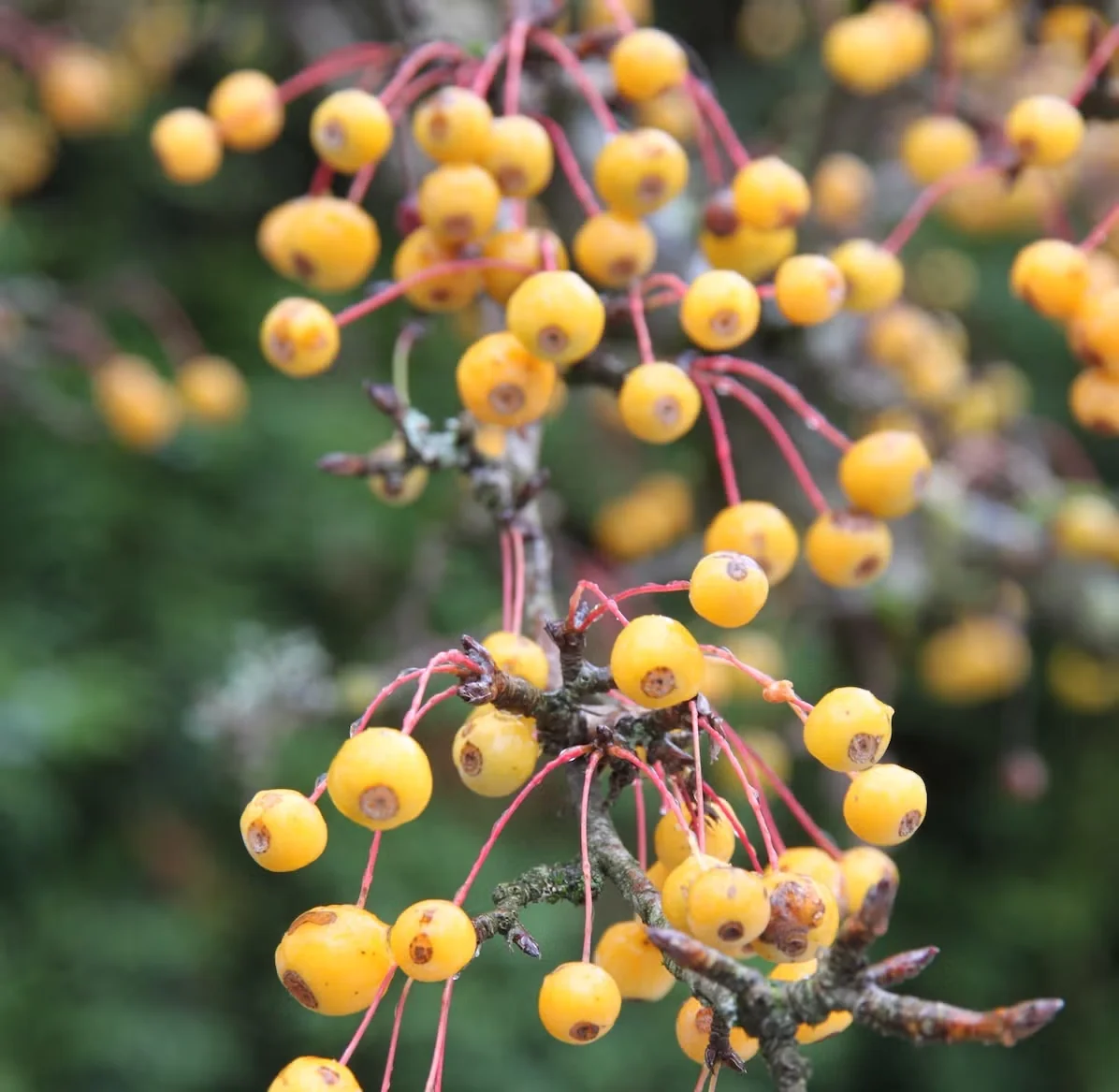
Golden Raindrops® (Malus 'Schmidtcutleaf'): This one really stands out with its yellow fruit and deeply lobed foliage that looks almost oak-like. Spring brings loads of white blooms that turn into tiny golden-yellow fruits covering the branches into early winter. It's a unique garden addition — this elegant tree eventually reaches 20 feet high and 15 feet wide with horizontal branching. Golden Raindrops can be prone to fire blight, but it has excellent resistance to other crabapple diseases. Zones 3–8. Image courtesy of J. Frank Schmidt & Son, Co.
Fruitless crabapples
Courageous (Malus x 'Durlawrence'): I've spent plenty of hours cleaning up messy fruit on sidewalks, and I'm guessing some of you can relate! Courageous, a First Editions tree, gives you bright pink fragrant flowers without the mess — it produces little to no fruit at all. The leaves bring seasonal interest too, starting maroon, shifting to greenish bronze in summer, then turning yellow-orange in fall. At 20 to 25 feet tall and 15 to 20 feet wide, it makes an impressive specimen with improved performance. Zones 2–7. Image courtesy of First Editions Shrubs & Trees.
'Prairie Rose' (Malus ioensis 'Prairie Rose'): When I first saw this tree, I was stunned by the double blooms. They reminded me of little rosebuds and looked noticeably bigger than other crabapple flowers I've seen. A selection of a Midwest-native species, 'Prairie Rose' was introduced by the University of Illinois. It has a rounded crown and grows to 20 feet tall and 18 feet across. While it's susceptible to cedar apple rust, it has good resistance to apple scab and sets no fruit at all. Zones 3–7. Image courtesy of J. Frank Schmidt & Son, Co.