“If you're putting together a bird garden, rain garden, or woodland edge, American cranberrybush (Viburnum opulusvar.americanum) deserves a spot on your list. This northern native shrub gives you…”
Clethra glauca
American Cranberrybush Benefits Birds and Other Garden Wildlife
If you're putting together a bird garden, rain garden, or woodland edge, American cranberrybush (Viburnum opulusvar.americanum) deserves a spot on your list. This northern native shrub gives you showy spring flowers, nice-looking foliage through the season, and vivid red fall fruit. The flowers feed pollinators, and it's even a larval host plant for moths and butterflies — so it's really pulling its weight for wildlife.
Common name: American cranberrybush, highbush cranberry
Botanical name: Viburnum opulusvar.americanum; syn. Viburnum trilobum
Origin: You'll find it in woods, thickets, and along riverbanks across roughly the northern half of the US and throughout Canada.
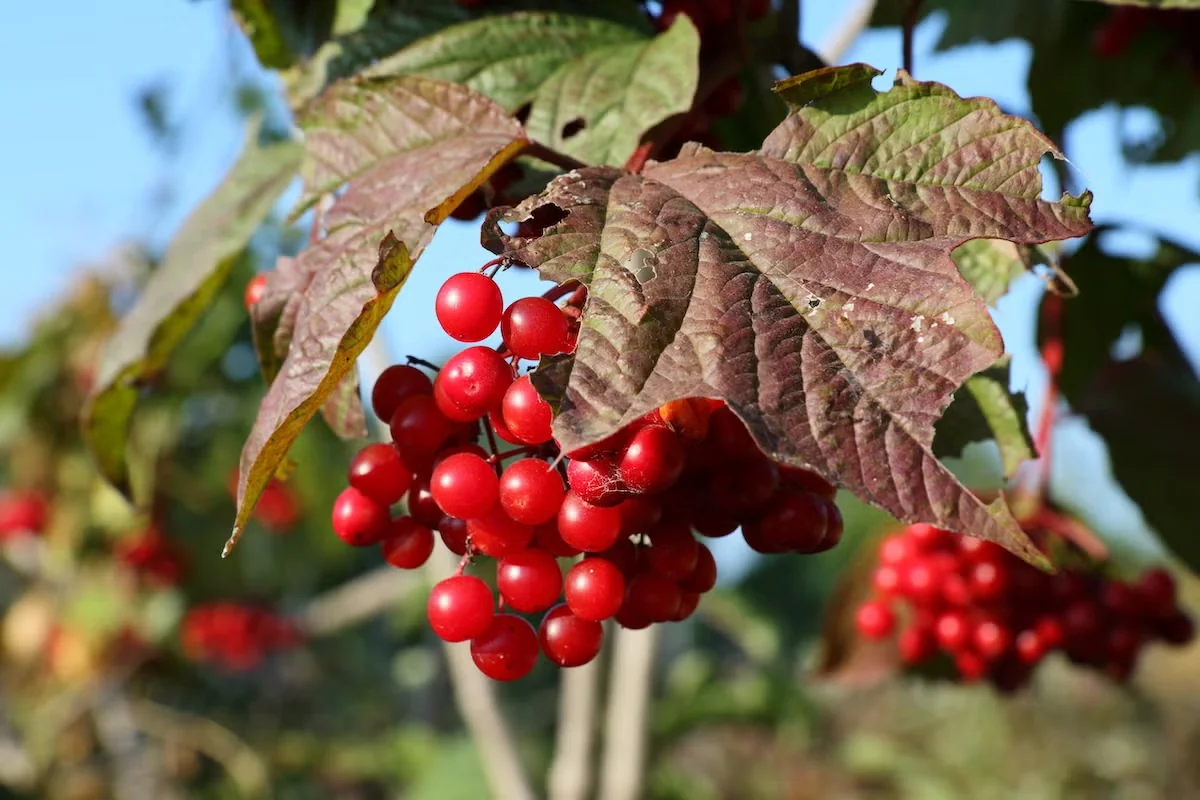
Flowers/fruits: In mid-spring, you get these round, flat-topped white flower heads about three inches across, made up of a mix of tiny fertile florets in the center and showier sterile florets around the edges. Then come clusters of oval-shaped fruits that ripen to a deep red in fall — they're edible and birds absolutely love them.
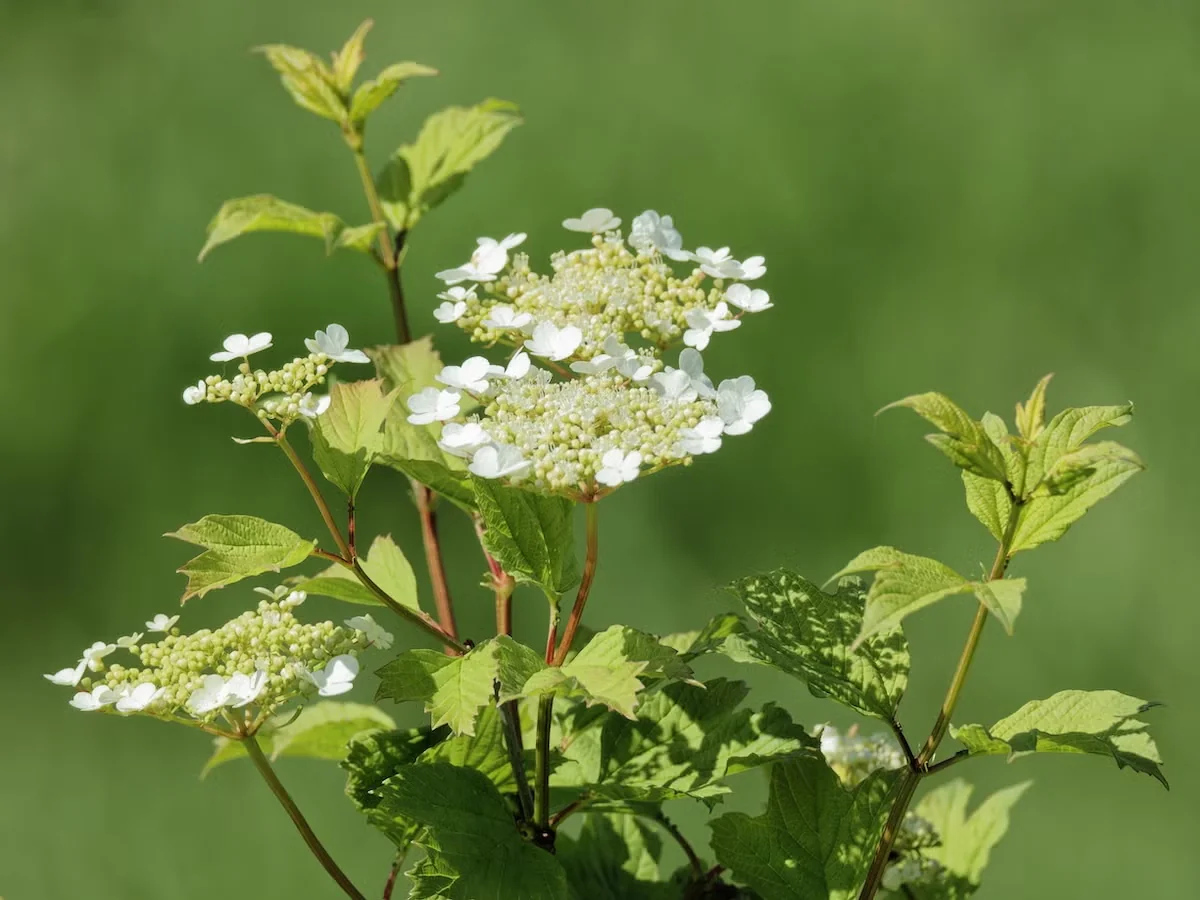
Foliage: The leaves are rounded with toothed edges and three distinct lobes — they really do look like maple leaves. They're a nice medium green through the growing season, then shift to yellowish or purplish red in the fall.
Size and habit: This is a deciduous shrub that reaches 8 to 12 feet tall and wide at maturity, with a rounded shape formed by dense upright to arching stems.
Growing American cranberrybush
Exposure: Full sun to part shade
How to grow it: American cranberrybush is super easy to grow — just plant it in full sun or part shade in average, well-drained soil. It likes regular moisture but can handle brief periods of flooding, too. An annual topdressing of compost or leaf mould will really help with flowering and fruiting. Here's a bonus: unlike a lot of garden viburnums, this one doesn't need a partner plant to set fruit — its flowers are self-fertile! USDA Zones 2–7.
Image credits: Fruit by Cephas - Own work, CC BY-SA 4.0; Flowers by Cephas - Own work, CC BY-SA 4.0