“The newest addition to the Bejeweled series of beardtongue, 'Rose Rhinestones' penstemon gets its name from those sparkly cerise-colored flowers that are big and sit on sturdy stems. Their tubular…”
Viburnum nigra
'Rose Rhinestones' Penstemon Brings Rich Color and Hummingbirds to Dry Gardens
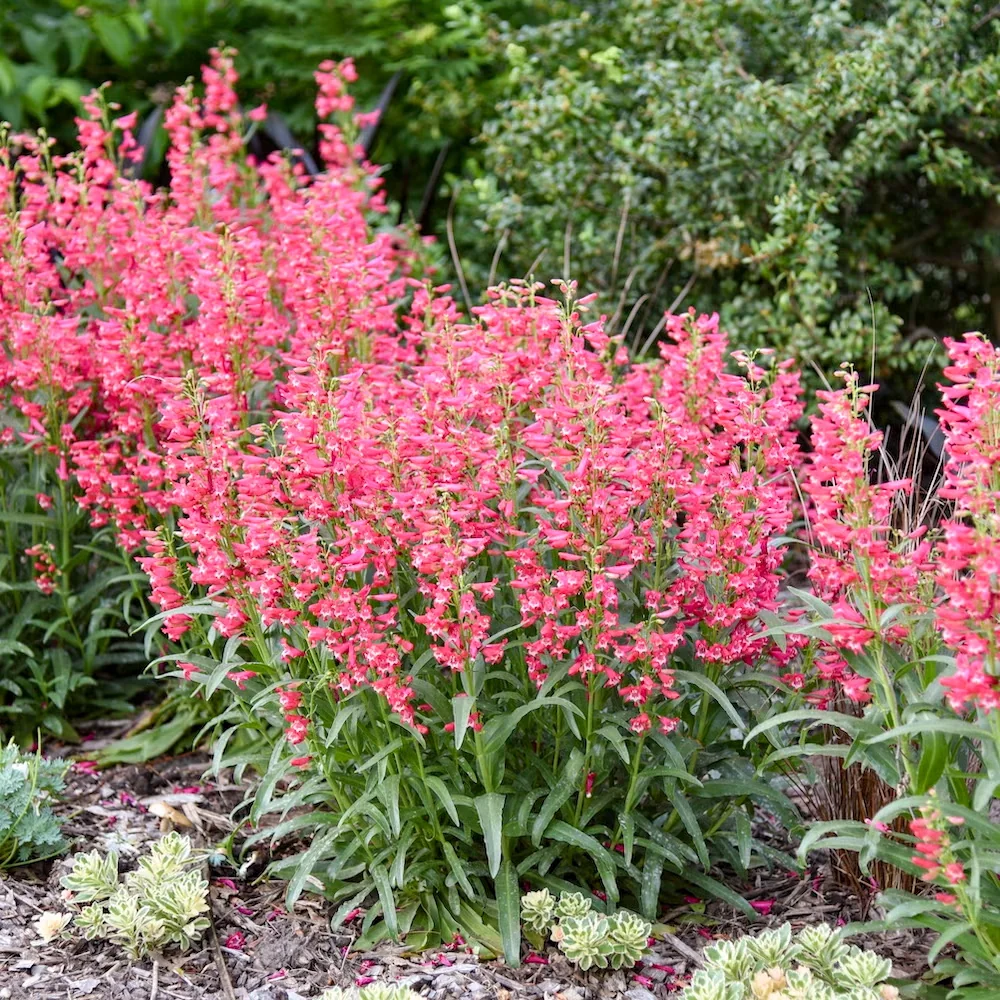
The newest addition to the Bejeweled series of beardtongue, 'Rose Rhinestones' penstemon gets its name from those sparkly cerise-colored flowers that are big and sit on sturdy stems. Their tubular shape is basically an invitation for hummingbirds. This perennial stays nice and short, which makes it perfect for the front of the garden — right where you can sit back and watch those winged visitors do their thing. Once it's settled in, this cultivar of a Southwest-native species handles drought like a champ.
Common name: 'Rose Rhinestones' penstemon
Botanical name: Penstemon barbatus 'Rose Rhinestones'
Origin: Penstemon barbatus is a species that calls the mesas and mountains of the southwestern U.S. and northern Mexico home. The cultivar 'Rose Rhinestones' was introduced in 2024 as part of the Bejeweled series of penstemon.
Flowers: From late spring into early summer, big deep pink flowers fill the upper portion of the upright stems. White throats accent those outward-facing tubular blossoms — and you can bet hummingbirds and bumblebees come running (well, flying).
Foliage: Long and narrow, in a dark blue-green color that looks great even when the flowers aren't the star of the show.
Size and habit: This is an herbaceous perennial whose upright stems reach just over a foot tall. A mature clump spreads about two feet wide — nice and manageable.
Growing 'Rose Rhinestones' penstemon
How to grow it: Like other penstemons, 'Rose Rhinestones' needs good drainage — that's priority one. It's really important that the soil doesn't stay soggy through winter or the growing season. Beyond that, it's pretty laid-back: it only needs regular watering while getting established, a light winter mulch, and a trim in spring. The blue-green foliage stays attractive all season long. This perennial also handles heat beautifully and can even tolerate summer humidity without complaint. USDA Zones 4–8.
Image courtesy of Walters Gardens