“If you want a plant that keeps the pollinator party going, 'Riptide' Stokes's aster is your friend. Those fringed purple flowers just keep coming from midsummer right through autumn. Since it's a…”
Tiarella chinensis
'Riptide' Stokes's Aster Provides Late-Season Flowers
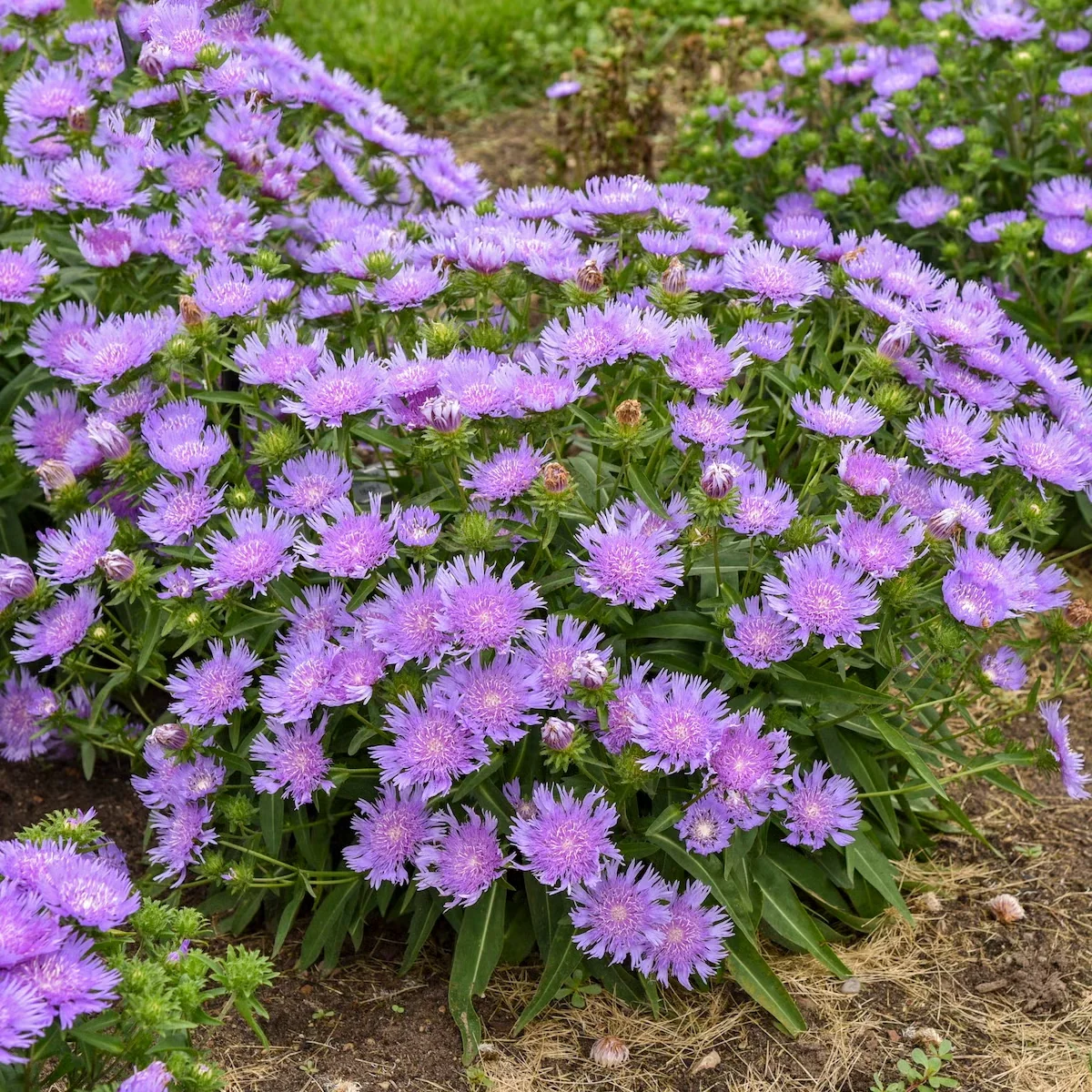
If you want a plant that keeps the pollinator party going, 'Riptide' Stokes's aster is your friend. Those fringed purple flowers just keep coming from midsummer right through autumn. Since it's a cultivar of a perennial native to the Southeast, it takes hot, humid weather in stride — and once it's settled in, it doesn't mind dry spells either.
Common name: 'Riptide' Stokes's aster
Botanical name: Stokesia laevis 'Riptide'
Origin: The species Stokesia laevis is native to the Southeast, where you'll find it hanging out in coastal plains, open woodlands, pinelands, and bogs. The genus name Stokesia honors English botanist Jonathan Stokes. Technically the common name is Stokes's aster, though you'll see it written all sorts of ways — stokes aster, Stokes' aster. 'Riptide' was bred at North Carolina State University and is part of the Totally Stoked series from Proven Winners (yes, that's really the name, and yes, it's great).
Flowers: Midsummer through autumn — it just keeps going and going.
Foliage: Long, narrow, and a nice medium green.
Size and habit: 'Riptide' forms a tidy dome — about two feet tall and three feet wide.
Growing 'Riptide' Stokes's aster
How to grow it: Honestly, Stokes's asters are a breeze. Just give them full sun, well-drained soil, and moderate water while they're getting settled. After that first season, they can handle some drought no problem. Snip off the spent flowers on 'Riptide' to keep the blooms coming, and cut the plant back in fall or spring. USDA Zones 5–9. (If you're gardening in Zone 5, toss some winter mulch on it for a little extra protection.)
Image courtesy of Walters Gardens