“If you're looking for a native plant that pulls its weight in a woodland garden, wild geranium (Geranium maculatum) is your friend. This eastern North American native brings lovely pink-purple…”
Narcissus nigra
Grow Geranium maculatum, or Wild Geranium, for Its Spring Flowers and Rugged Health
If you're looking for a native plant that pulls its weight in a woodland garden, wild geranium (Geranium maculatum) is your friend. This eastern North American native brings lovely pink-purple flowers in spring, adds wonderful leafy texture, and even helps keep weeds at bay — what more could you want?
Common name: Wild geranium, spotted geranium
Botanical name: Geranium maculatum
Origin: Geranium maculatum is native across a huge chunk of the eastern half of North America, from central and eastern Canada all the way down to Arkansas and Georgia. In the wild, you'll find it hanging out at woodland edges, in clearings, and in both dry and moist woods.
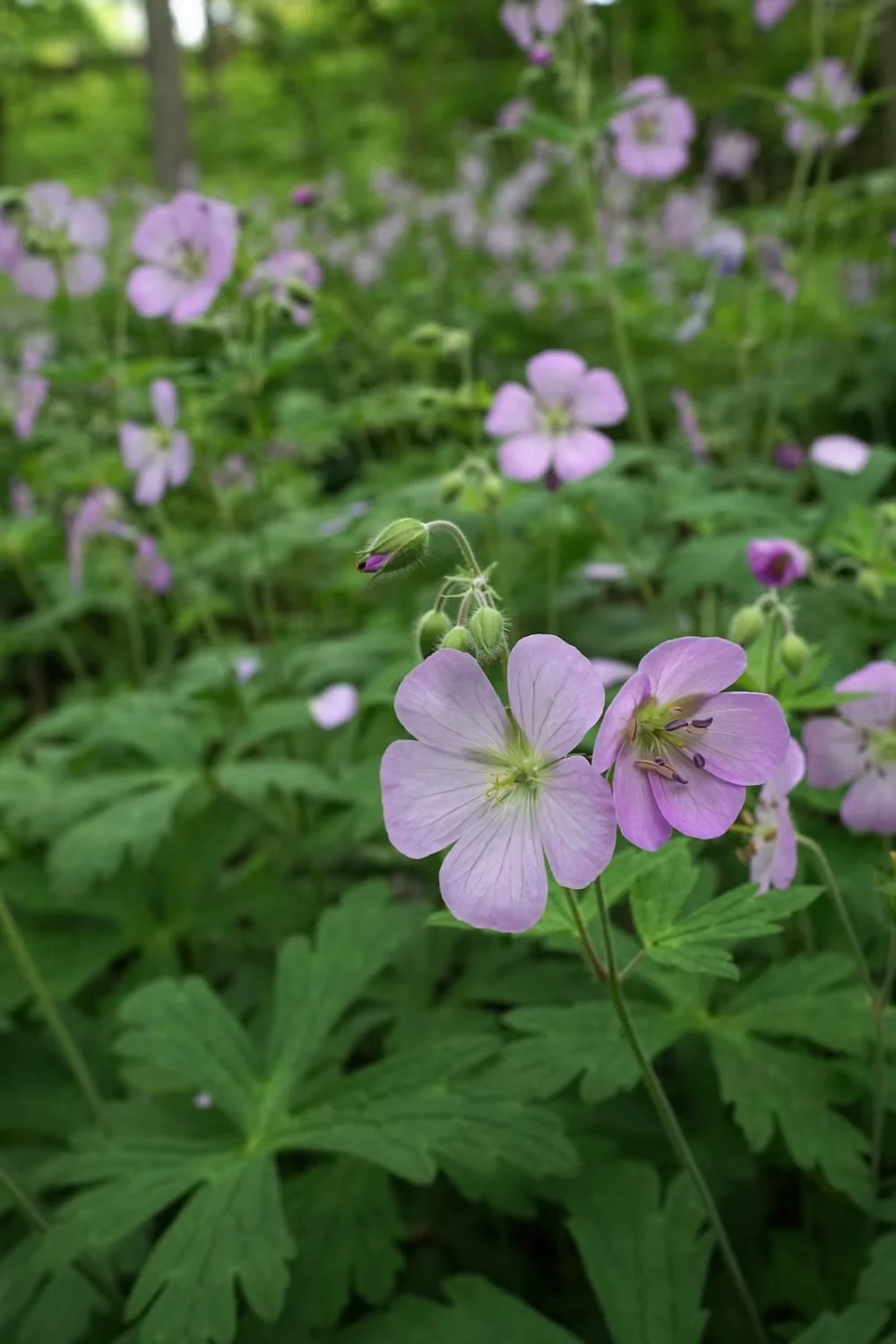
Flowers: Wild geranium blooms from mid to late spring and sometimes into early summer, putting out clusters of five-petaled pale purple or light pink flowers on airy, branching stems that rise above the foliage. Cooler weather stretches out the bloom time — a nice little bonus. Native bees, honey bees, and other pollinators absolutely adore this plant.
Foliage: The leaves are maple-shaped and medium green, and they're dense enough to shade the soil underneath, which does a great job of suppressing weeds. During summer heat and drought, the leaves can develop brown spots or show other signs of stress, but don't worry — that's not a cause for concern about the plant's overall health. It's just doing its thing.
Size and habit: Spotted geranium is an herbaceous perennial that pops back up in early spring and goes dormant in autumn (or earlier if summer gets really dry). Individual plants reach about a foot tall and wide in foliage, with the flowers adding another six to twelve inches of height. It spreads by rhizomes (those underground stems) to form a colony over time, but it's not what you'd call an aggressive spreader — it plays nice.
Growing Geranium maculatum
Exposure: Part shade to shade
How to grow it: Geranium maculatum is wonderfully adaptable — it's happy in dry or moist soil and does fine in part shade, all-day dappled light, or full shade. You'll get more flowers with more sunlight, but that also means you'll need to water more often.
Wild geranium prefers moist conditions, but once it's established it can handle dry spells just fine. An extended drought might cause it to go dormant before summer's over, but don't panic — it'll come back strong the following spring.
Pair Geranium maculatum with companions that stay looking good in late summer to cover for any leaf decline. Great options include wood aster (Eurybia divaricata), sedges (Carex), ferns, hardy begonia, and other shade-garden staples like hosta.
Spotted geranium's natural woodland habitat gives it rich soil, so try to recreate those conditions by mulching with fallen leaves and other garden debris. To propagate, transplant root divisions anytime the plant is dormant and the soil is workable — early spring, late summer, or early fall all work. USDA Zones 3–8.
Image credit: Plant Image Library/CC BY-SA 2.0