“'Everillo' sedge is one of those bright-leaved, shade-loving, evergreen grassy perennials that just lights up shady spots year-round. It's fine-textured, practically carefree, and its compact size…”
Astilbe minor
Gold-Hued 'Everillo' Sedge Brightens Shade Gardens and Pots
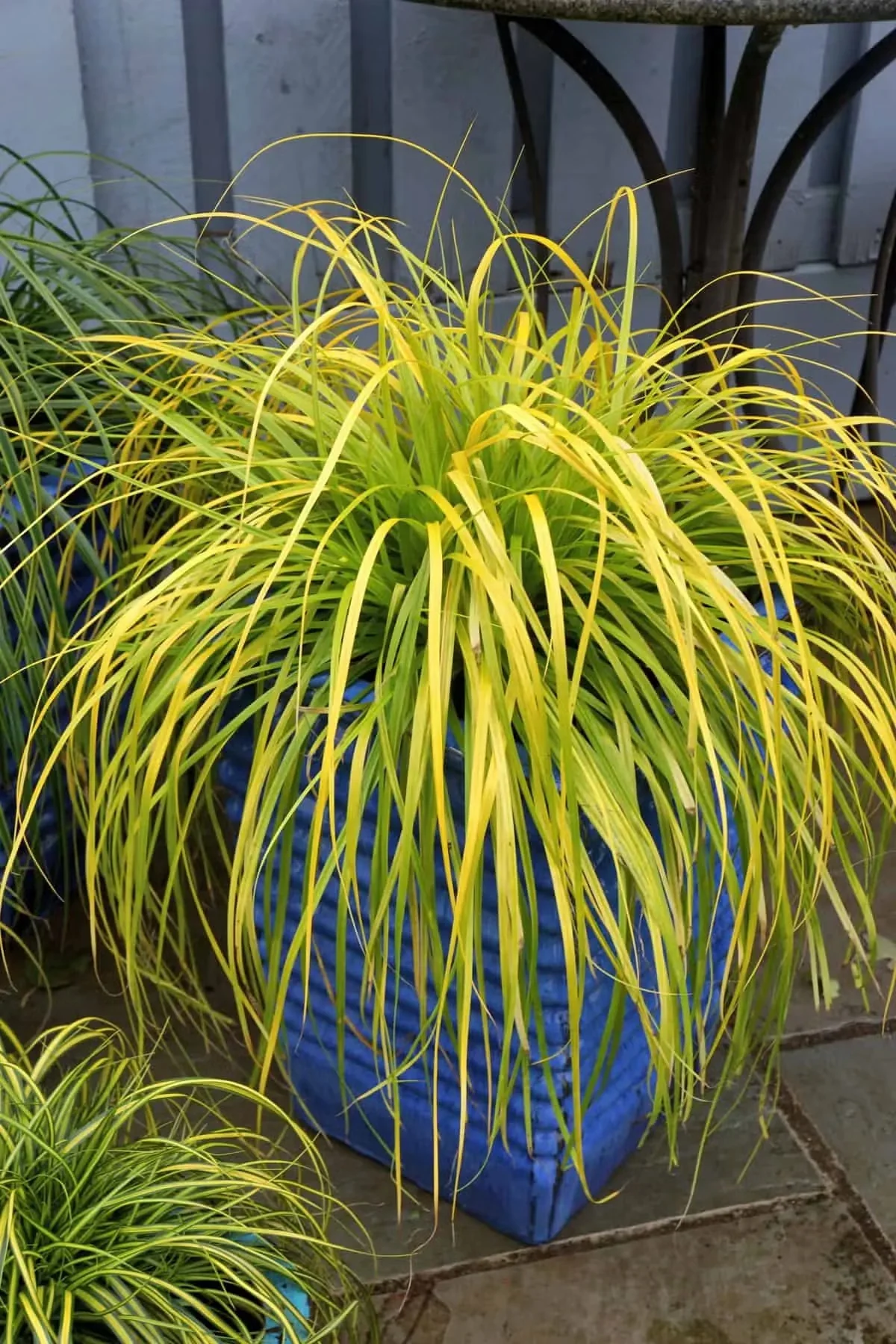
'Everillo' sedge is one of those bright-leaved, shade-loving, evergreen grassy perennials that just lights up shady spots year-round. It's fine-textured, practically carefree, and its compact size means you can use it all over the place. Line up several as edging or mass them for bold blocks of color, or just tuck single plants around as accents. It also grows beautifully in pots — solo or mixed with companions.
Common name: 'Everillo' sedge
Botanical name: Carex oshimensis 'Everillo'
Origin: Carex oshimensis is native to Japan. 'Everillo' turned up as a sport (mutation) of the popular 'Evergold' cultivar and was introduced in 2010. It's part of the EverColor series of sedges, developed by Patrick FitzGerald at FitzGerald Nurseries in Kilkenny, Ireland.
Foliage: The grassy leaves are a bright, glowing golden-green. It's fully evergreen in the South, and even in the northern part of its range it holds onto decent color through mild to moderate winters.
Size and habit: Grows to just over a foot tall and wide, with a neat mounded, fountain-like shape.
Growing 'Everillo' sedge
Exposure: Part shade, dappled light, full shade
How to grow it: Give 'Everillo' a few hours of sun or all-day dappled light for the best growth and that gorgeous golden color. Keep it out of full sun — it'll scorch. In more shade, the foliage shifts toward chartreuse, which is still pretty! It likes moderately moist to wet soil with average fertility. Just cut back any spent or damaged foliage to the ground in late winter, and you'll make room for fresh new growth come spring. USDA Zones 5–9.
Image courtesy of Southern Living Plant Collection