“Every year, the Perennial Plant Association — a group of plant and garden pros — votes one species or cultivar as Perennial Plant of the Year (you can check out all the past winners here). They look…”
Allium viridis
The 2025 Perennial Plant of the Year: Clustered Mountain Mint
Every year, the Perennial Plant Association — a group of plant and garden pros — votes one species or cultivar as Perennial Plant of the Year (you can check out all the past winners here). They look for plants with a wide growing range, good availability, pest and disease resistance, easy care, and of course, beauty across more than one season. For 2025, the honor goes to clustered mountain mint (Pycnanthemum muticum).
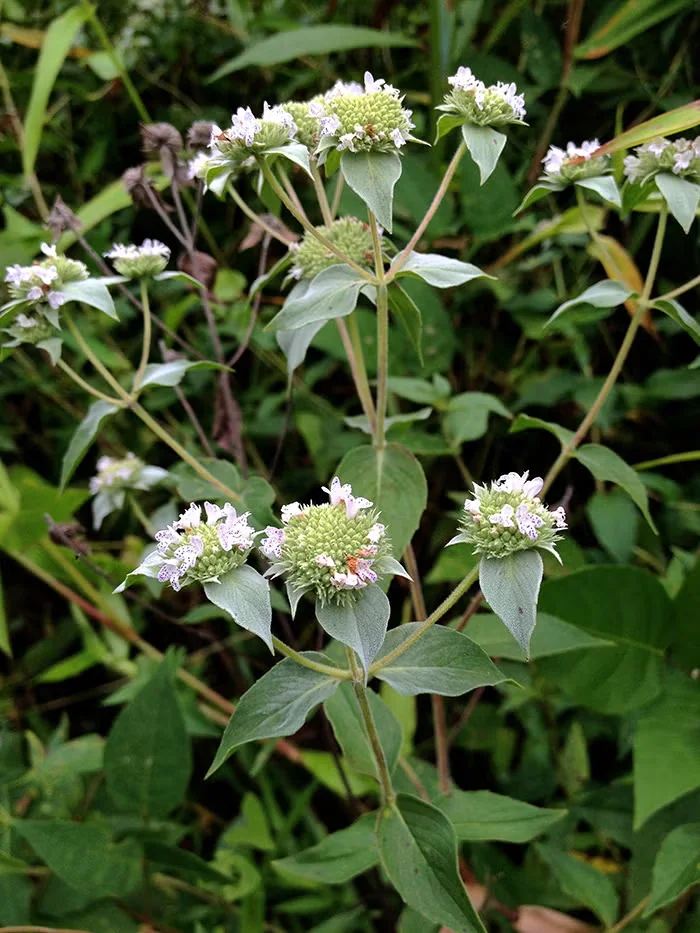
Bees and butterflies absolutely go crazy for clustered mountain mint. It blooms from midsummer right into fall, with these eye-catching silver bracts surrounding clusters of tiny, barely-pink tubular flowers. Those unique blooms top upright stems that reach two to three feet tall. The mint-scented leaves along the stems seem to keep deer and rabbits at bay, and the stems rise from rhizomes that spread through the soil to form a dense ground cover.
Common name: Clustered mountain mint, short-toothed mountain mint
Botanical name: Pycnanthemum muticum
Exposure: Full sun to part shade
Flowers: Clusters of small, light pink, tubular flowers show up from midsummer to fall, framed by silvery bracts (those modified leaves that surround the flower clusters).
Foliage: Medium green, oval-shaped leaves with a minty scent that supposedly keeps deer and rabbits away.
Size and habit: Clustered mountain mint grows two to three feet tall and at least as wide. New stems pop up from rhizomes spreading through the soil. Thanks to that growth habit, it's a terrific ground cover — as the rhizomes stretch out, they fill space and create a dense stand of stems that shades out weeds.
Origin: Pycnanthemum muticum grows naturally across roughly the eastern half of the United States, hanging out in open meadows and low woodlands. It's one of several North American natives the Perennial Plant Association has honored in recent years, joining butterfly weed (2017), 'Jeana' tall phlox (2024), and little bluestem (2022).
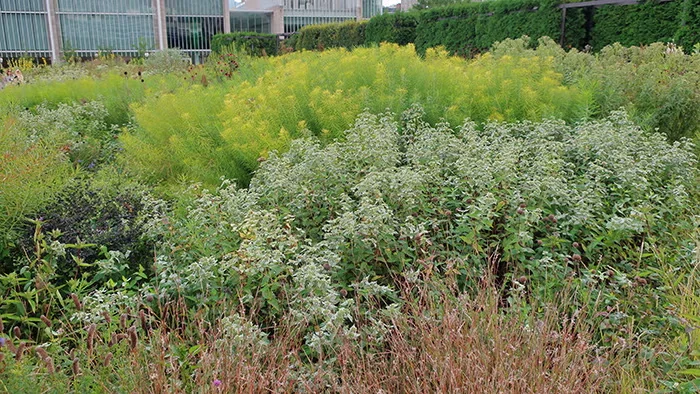
How to grow it: This perennial is happy in full sun to part shade and moderately moist to damp soil — just make sure it drains well. It'll even grow in clay. More sun means more flowers. Lean soil and drier conditions help keep its spreading tendency in check. In moist soil it can get a bit aggressive, but the rhizomes are easy to chop back if it starts crowding its neighbors.
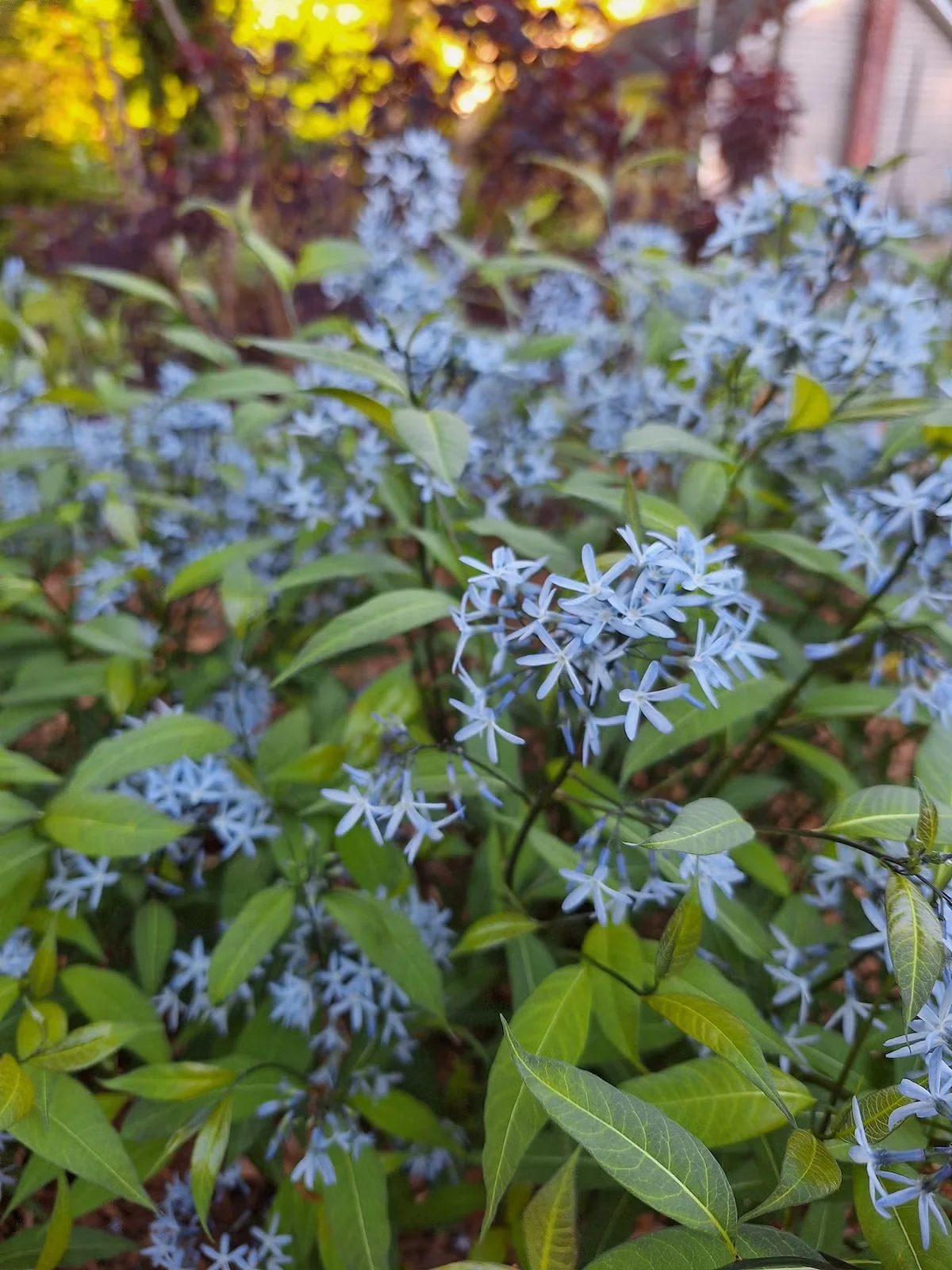
Think of clustered mountain mint as a team player in perennial combos. Great companions include deep-rooted prairie grasses and summer-blooming, moisture-loving perennials that won't get pushed around — things like black-eyed Susans (Rudbeckia), beebalms (Monarda), Joe Pye weeds (Eutrochium), and, for spring color, bluestars (Amsonia). USDA Zones 4–8.
Image credits, top to bottom: Fritz Flohr Reynolds/CC BY-SA 2.0/Flickr.com; cultivar413/CC BY 2.0/Flickr.com